
The role of modern flame retardants in construction


Delivering on Clariant's purpose »Greater chemistry - between people and planet.«
This story is an example of how Clariant delivers on its purpose-led strategy.
Fire safety in modern construction has become increasingly complex and urgent. From towering steel frameworks to engineered wood systems and high-tech infrastructure, today's buildings must not only perform, they must protect.
Passive fire protection (PFP) is essential to slow fire spread and preserve structural integrity long enough for evacuation and emergency response.
The science behind intumescent coatings
Intumescent coatings, which expand upon heat exposure to form insulating char layers, are widely used to protect steel structures and other materials vulnerable to high temperatures. Steel, for example, begins to lose strength at temperatures above 500°C, so delaying heat transfer is vital to prevent collapse and allow safe evacuation.
These coatings are essential in fire safety strategies for tall buildings, transportation hubs like airports and train stations, commercial centers, and logistics warehouses. Any place where evacuation time is critical, these coatings provide an invisible yet indispensable layer of protection.
At the heart of these systems are flame retardants, chemical agents that can make the difference between containment and catastrophe. Among the materials now leading the way is ammonium polyphosphate (APP), a key flame retardant that initiates the formation of this insulating char layer.
How ammonium polyphosphate (APP) works
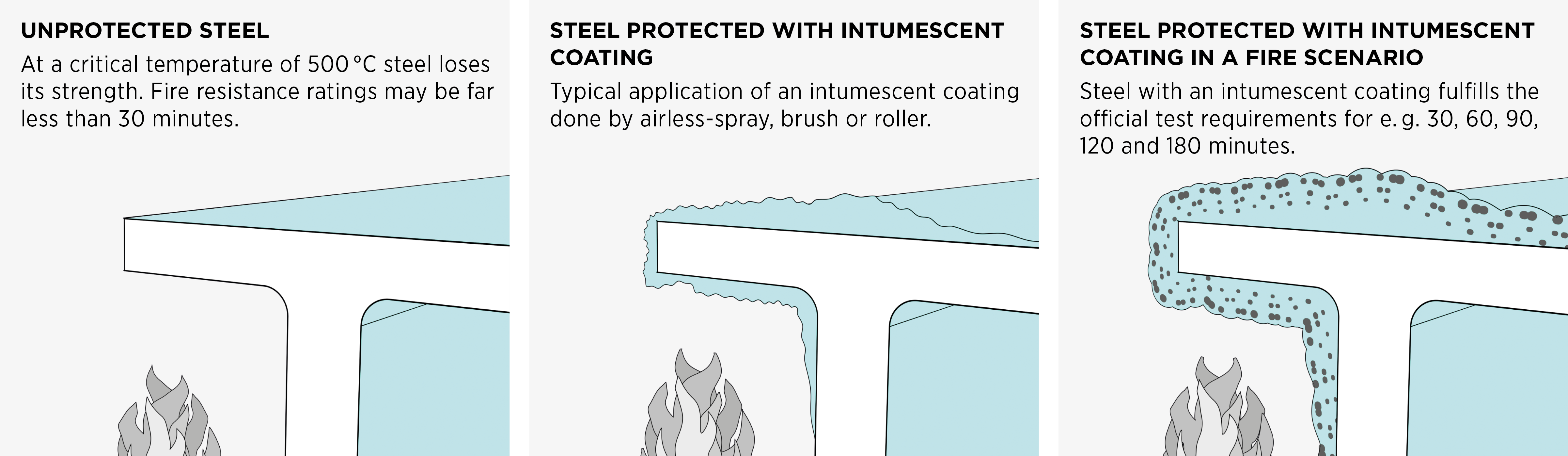
Unlike active fire suppression systems such as sprinklers, which require external triggers, APP-based intumescent coatings are designed to activate only when exposed to heat. At high temperatures, these coatings expand into a thick, protective char layer that acts as a thermal barrier.
By slowing heat transfer, this layer prevents structural materials from reaching dangerous temperatures. It also delays fire damage, buying time for emergency responders to contain the situation. Most importantly, in steel structures, APP-based coatings help maintain the integrity of load-bearing frameworks, reducing the risk of collapse. This chemical transformation is a cornerstone of passive fire protection, ensuring that fire damage is controlled and limited in its spread.
Advancing fire safety through innovation
As sustainability standards evolve, flame retardant technologies must do more than perform. They must also meet stringent environmental and regulatory benchmarks. This shift has redefined what is expected of materials like APP.
Traditional flame retardants often relied on halogenated compounds or melamine-based APPs. While effective, these substances have come under increased regulatory scrutiny, particularly in regions like Europe under REACH legislation. Melamine, for example, is now classified as a Substance of Very High Concern (SVHC). In response, the industry has been moving toward more environmentally compatible alternatives. One such development is next-generation APP, which maintains fire resistance while meeting evolving regulatory requirements.
These modern APPs are engineered to:
- React predictably at target temperatures
- Produce minimal smoke
- Form a strong, stable char layer
- Integrate well into a wide variety of coating binders
Applications in building and construction
Flame retardants are essential for enhancing fire safety across a wide range of construction materials and systems:
- Structural steel coatings: Intumescent coatings with advanced APP formulations such as Exolit™ AP create a heat-activated char layer that insulates steel, delaying temperature rise and preserving structural integrity during fire exposure.
- Wood and composite materials: Enhance fire resistance in timber and engineered wood products, enabling safer use of renewable materials in construction.
- Insulation and panels: Improve the fire performance of insulation boards and wall panels without compromising environmental standards.
- Cabling and electrical components: Ensure fire safety in wiring and junction boxes, especially important in increasingly electrified and smart buildings.
This year marks 50 years of innovation behind Exolit™ AP, Clariant’s trusted range of ammonium polyphosphate-based flame retardants, whose expertise continues to drive modern fire protection solutions by balancing performance, safety, and sustainability across evolving applications.
The hidden hero in fire safety
While invisible once applied, APP plays a vital role in modern construction. It quietly strengthens the resilience of buildings, enhances the safe use of sustainable materials, and helps meet strict regulatory demands, all without compromising performance. By preserving structural stability and slowing fire progression, APP strengthens building resilience and enables longer evacuation time and more effective emergency responses.
Driving the future of fire protection
As urban landscapes expand and fire protection standards become more demanding, the role of passive fire protection solutions will only increase. The latest advancements in APP technology, including SVHC-free* formulations and next-generation intumescent coatings, are paving the way for more efficient, durable, and sustainable fire safety solutions.
The shift toward safer, more sustainable flame retardants is no longer just about regulatory compliance. It’s about empowering construction to withstand fire threats without compromising environmental goals. By advancing fireproofing materials, modern chemistry plays a decisive role in building safety.
In a world where fire risks can’t be eliminated, silent protectors like APP-based coatings offer essential reassurance. Invisible once applied, their impact becomes undeniable when it matters most.
*SVHC-free according to Article 31 of the REACH Regulation as it contains less than 0.1% melamine