Bleaching earth for edible oil refining Tonsil™ adsorbents by Clariant
Why edible oil purification matters
Edible oil purification removes natural impurities and process-generated contaminants from crude vegetable oils, making them safe, stable, and compliant for food use. It is a mandatory step in producing every liter of edible oil consumed worldwide, not an optional refinement.
Edible oils are among the world's most essential food commodities. Each year, approximately 157 million tons of edible oil are extracted globally from oil-rich seeds and fruits, including palm, soybean, sunflower, rapeseed, canola, cottonseed, peanut, corn, and coconut. Global demand for these oils is forecast to keep rising in line with population growth, placing increasing pressure on refiners to purify greater volumes without compromising quality or speed.
While crude oil extracted directly from these crops is naturally rich in nutrients, it is never fit for direct consumption or industrial use. Raw oil carries two distinct categories of undesirable substances that must be removed during refining:
Naturally Occurring Impurities
Impurity Source Effect if not removed Phospholipids (gums) Native to crude oil Haze, instability, poor filterability Carotenoids & chlorophyll Natural pigments Undesirable color Peroxides Early oxidation Rancidity, off-flavor Free fatty acids Natural hydrolysis Reduced shelf life, poor taste Heavy metals Soil, processing equipment Accelerated oxidation Crop protectant residues Agricultural treatment Food safety risk Waxes & soaps Native to crude oil / neutralization Cloudiness, downstream fouling
Process-Generated Contaminants
Contaminant Formed during Regulatory relevance 3-MCPD esters High-temperature refining EU max 1.25 µg/kg (Reg. 2023/915) Glycidyl esters (GE) High-temperature refining Regulated; tightened for infant food (Reg. 2024/1003) MOSH/MOAH Environmental & processing exposure Emerging global regulatory concern Left unaddressed, these compounds compromise appearance, taste, odor, and shelf life, and increasingly trigger regulatory non-compliance in major global markets. Industrial refining is therefore not optional but essential, and bleaching earth lies at the heart of that process.
The edible oil refining process: From crude oil to bleaching earth purification
Crude vegetable oils undergo a multi-stage refining process. Two primary routes are used across the industry: the traditional alkali (chemical) refining process and physical refining — the key difference being the method by which free fatty acids are removed. In both cases, the process follows the same fundamental sequence:
Degumming Water or acid degumming removes hydrated and non-hydrated phospholipids (gums) from the crude oil. This is a critical first step, as residual phospholipids would interfere with subsequent refining stages and reduce the effectiveness of bleaching earths.
Neutralization (chemical refining) or acidification (physical refining) In chemical refining, caustic soda is used to neutralize free fatty acids, which are removed as soapstock. In physical refining — increasingly preferred for high free fatty acid oils such as palms, the free fatty acids are removed by steam stripping in a later deodorization step.
Bleaching This is the stage at which TONSIL™ bleaching earth performs its central function. The oil is mixed under vacuum and at controlled temperature with activated bleaching earth, which adsorbs impurities including residual phospholipids, pigments (carotenoids, chlorophyll), peroxides, heavy metals, soaps, and process contaminants such as 3-MCPD precursors. The spent bleaching earth is then removed by pressure filtration.
Deodorization The final stage applies high-temperature steam stripping under high vacuum to remove volatile compounds — free fatty acids (in physical refining), odor and taste compounds, and any remaining trace contaminants — delivering a neutral, stable, shelf-stable finished oil.
TONSIL™ — Over a century of activated bleaching earth science
TONSIL™ is Clariant's activated bleaching earth brand, derived from natural bentonite clay, first discovered in 1906 and commercialized in 1909. With over 115 years of continuous development, it remains the world's most established line of activated bleaching earths for edible oil refining.
A discovery rooted in Bavaria, refined over 115 years
TONSIL™ bleaching earth traces its origins to 1906, when the mineral was first discovered near Moosburg an der Isar, Bavaria. Commercialized under the TONSIL™ brand name in 1909, the product has undergone over 115 years of continuous scientific development, making it the world's most established line of activated bleaching earths for edible oil refining.
Every TONSIL™ grade originates from natural bentonite clay, primarily composed of montmorillonite, a layered silicate (smectite) mineral prized for its distinctive crystalline structure.
Documentation available: historical doc - 3-MCPD doc.
The science behind the performance: acid activation
The defining step in TONSIL™ manufacturing is acid activation — a precisely controlled process in which raw bentonite is treated with mineral acid. This treatment:
- Significantly increases the internal surface area of clay particles
- Improves adsorptive, catalytic, and ion-exchange properties
- Tailored to each grade to target specific refining applications and particular contaminant profiles
Precision Engineering, grade by grade
The adsorption effectiveness of every TONSIL™ grade is governed by an engineered combination of four key material properties:
- Particle size and pore size distribution — control of the surface area in contact with the oil
- Specific surface area — determine of the quantity of impurities that can be adsorbed
- Cation exchange capacity — enable the removal of heavy metals and polar compounds
- Acid properties and catalytic activity — support decomposition of oxidation products
These properties must be precisely matched to the oil type, feedstock quality, and process conditions, including temperature, contact time, pressure, vacuum level, and filter cycle parameters, to achieve optimal results.
Today, TONSIL™ bleaching earths are used in the purification of more than one third of the world's total annual production of oils and fats, making Clariant a global leader in the field.
Compatible feedstock: all major oil types covered
TONSIL™ is formulated to handle the full spectrum of commercially relevant edible oil feedstocks, including:
- Palm oil and palm kernel oil — the world's most widely produced vegetable oil, requiring specific solutions for 3-MCPD and GE mitigation
- Soybean oil — the most consumed oil in the Americas, particularly demanding in terms of phospholipid removal
- Sunflower oil — requiring effective carotenoid and chlorophyll reduction
- Rapeseed / canola oil — including dedicated grades for the North American canola market
- Cottonseed, peanut, safflower and corn oils — covered by TONSIL™'s broad range of tailored grades
Clariant's laboratory-scale process simulation capability allows each TONSIL™ solution to be precisely adapted to the customer's specific feedstock quality and process parameters before deployment.
3-MCPD and Glycidyl Esters: Meeting the Regulatory Challenge
One of the most significant quality and safety issues facing the edible oil industry is the formation of 3-monochloropropanediol (3-MCPD) esters and glycidyl esters (GE) process-induced contaminants that form when lipids react with chlorine-containing compounds at elevated temperatures, most prominently during the deodorization of palm oil.
3-MCPD is classified as a possible human carcinogen by international health authorities, with documented links to impaired fertility, immune suppression and organ-related health risks. The European Food Safety Authority (EFSA) has established a Tolerable Daily Intake (TDI) of 2 µg 3-MCPD per kg body weight. Glycidyl esters, which release genotoxic glycidol upon digestion, are subject to tightening EU regulations, particularly for infant formula and foods for young children.
Links to studies:
- EFSA – Process contaminants in vegetable oils and foods
- EFSA – Process contaminants in food
- EU Regulation 2018/290
Clariant has been at the forefront of addressing this challenge since 2006, when the company first identified the role of bleaching conditions in 3-MCPD formation and began developing targeted solutions. Today, TONSIL™ Low 3-MCPD product range offers:
- Reduction of 3-MCPD ester levels by up to 50%
- Simultaneous effective removal of carotenoids, peroxides, phospholipids and heavy metals
- Compliance with current and upcoming EU regulatory thresholds for glycidyl levels
- Fast filtration properties, helping to optimize total cost of ownership (TCO)
The TONSIL™ Low 3-MCPD range simultaneously removes carotenoids, peroxides, phospholipids, and heavy metals, supports compliance with current and upcoming EU glycidyl thresholds and maintains fast filtration properties for optimized total cost of ownership. At the same time, it preserves valuable nutrients, including vitamin E, omega-3 and omega-6 fatty acids, and mono- and polyunsaturated fats.
Protecting nutrients while removing impurities
A core design principle of TONSIL™ is selectivity: the bleaching earth must efficiently remove harmful and undesirable substances while leaving the oil's nutritional profile intact. TONSIL™ grades are specifically engineered to preserve:
- Tocopherols (vitamin E): natural antioxidants critical to both consumer health and oil shelf life
- Phytosterols: plant-based compounds linked to cardiovascular health benefits
- Omega-3 and omega-6 polyunsaturated fatty acids: essential fatty acids sensitive to oxidative degradation
- Carotenoids: selectively preserved where nutritionally valuable, e.g., red palm oil applications
A natural solution with a sustainable footprint
TONSIL Bleaching Earth is a 100% natural product derived from volcanic bentonite clay, a renewable mineral resource. Clariant's selective mining process ensures consistent raw material quality at source, minimizing variability and supporting the long-term reliability of the final product. The spent bleaching earth, filtered out after the bleaching stage, has established secondary use pathways, including application as a soil conditioner or in energy recovery processes, supporting circular economy principles in line with growing sustainability requirements across the food industry.
Quality manufacturing is underpinned by DIN ISO 9001/14001 certification at Clariant's main production facility in Moosburg, Germany, with additional capacities available in Mexico and Yuncos, Spain, providing supply security and local logistics support across the Americas and EMEA regions.
Tailor-made TONSIL™ solutions: Lab-scale customization backed by global manufacturing scale
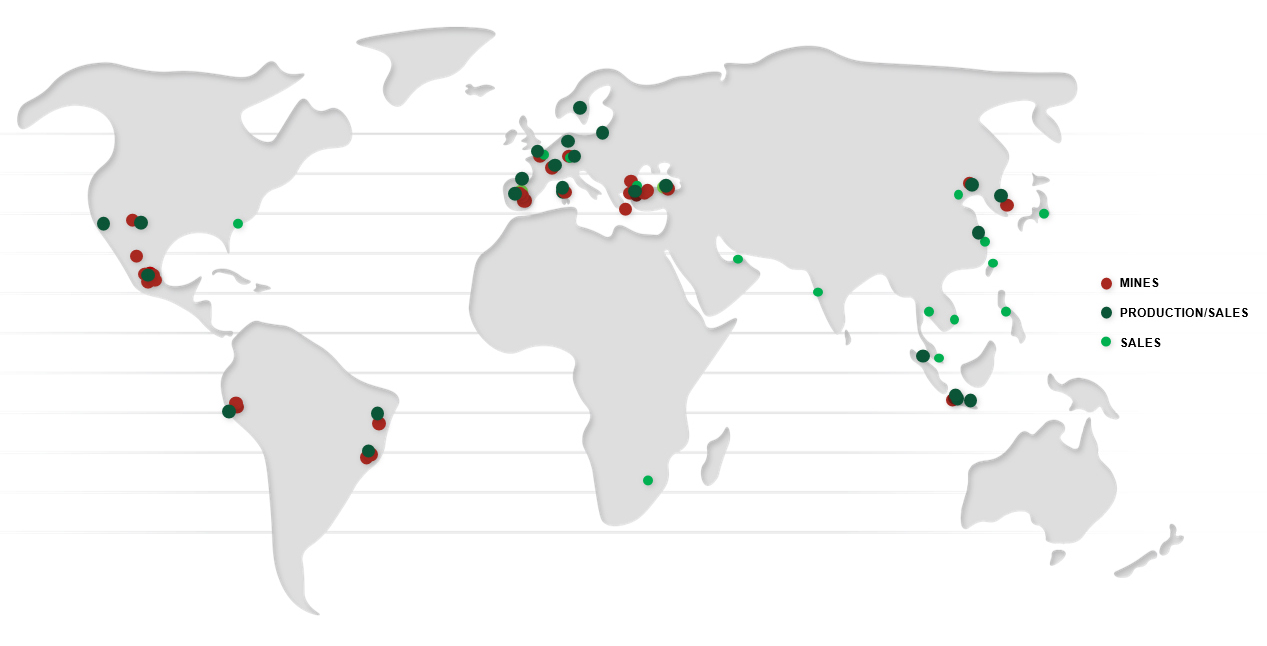
Clariant reproduces a customer's edible oil refining process at laboratory scale to precisely tailor TONSIL™ solutions, including dedicated formulations for reducing 3-MCPD esters and glycidyl esters (GE) in palm oil. Backed by over a century of refining expertise, Clariant serves customers in 109 countries through 12 manufacturing sites and 38 mines worldwide, with quality underpinned by DIN ISO 9001/14001 certification.
No two refining operations are identical and the challenges posed by impurities also vary from one operation to another. Clariant can reproduce a customer's edible oil refining process on a laboratory scale, allowing TONSIL™ solutions to be accurately tailored to the specific feedstock, process conditions, and quality targets at hand. This same tailored approach efficiently addresses one of the industry's toughest challenges: minimizing 3-MCPD esters and glycidyl esters (GE) in palm oil, with formulations adapted to the actual feedstock being processed.
This capability is the product of over a century of experience in refining edible oils and fats. Today, Clariant remains a truly global player and thought leader in edible oil purification, with a footprint that spans:
109Countries served
12Manufacturing Sites
38Mines
Connect with Clariant's TONSIL™ experts in your region
Clariant provides dedicated TONSIL™ purification experts across four global regions — EMEA, NORAM, LATAM, and SEAP — plus specialized catalyst experts, ensuring every customer receives technical guidance suited to their local market and regulatory environment.
Choosing the right bleaching earth solution goes beyond product selection — it requires local technical guidance that understands your region's feedstock characteristics, regulatory requirements, and supply chain realities. Clariant's global network of TONSIL™ specialists ensures every customer, wherever they operate, has direct access to expert support.
Your catalysts expert
Your TONSIL expert in EMEA Region
Your TONSIL expert in LATAM Region
Your TONSIL expert in NORAM Region
Your TONSIL expert in SEAP Region
Frequently Asked Questions
Bleaching earth is an acid-activated clay derived from natural bentonite. Added to crude or degummed oil under vacuum and controlled temperature, its large internal surface area adsorbs pigments, phospholipids, peroxides, heavy metals, and process contaminants. The spent earth is then removed by pressure filtration, leaving a purified oil ready for deodorization.
TONSIL™ is compatible with all major edible oil types, including palm, palm kernel, soybean, sunflower, rapeseed, canola, cottonseed, peanut, safflower, and corn oil, with application-specific grades tailored to each feedstock's composition and refining requirements.
3-MCPD esters are process-induced contaminants that form primarily during high-temperature deodorization of oils containing chlorine-containing precursors. They are classified as possibly carcinogenic to humans. EFSA has set a TDI of 2 µg/kg body weight, and the EU has introduced maximum limits, particularly for infants and follow-on formula. TONSIL™ Low 3-MCPD grades reduce 3-MCPD ester formation by up to 50% at the bleaching stage.
Yes. Clariant's technical team can reproduce a customer's refining process at laboratory scale, optimizing TONSIL™ grade selection and dosage to specific feedstock quality, process parameters, and target specifications, alancing purification performance with filtration speed and total cost of ownership.
No, TONSIL™ grades are engineered for selectivity, removing harmful and undesirable substances while preserving key nutritional components, including vitamin E, phytosterols, and essential fatty acids.
Edible oils - an indispensable food
Edible oils represent an indispensable ingredient in food and food preparation around the world. On a yearly and worldwide basis, around 157 million tons of edible oil are extracted from oil-rich seeds and fruit. These products are abundant in nutrients, have a long storage life, and are suitable for different culinary applications.
Refining process stages
The oil is not merely pressed from the oil-rich material. It undergoes a multistage refining process to remove impurities, dyestuffs, and residues that can degrade the quality of the oil.
Materials based on natural bentonite clay, like Clariant's TONSIL™, play a decisive role in refining edible oils as they possess high absorption capacity. Once TONSIL™ particles absorb the impurities and contaminants, they are filtered through by presses.
Finally, the remaining quality-affecting compounds and contaminants are removed from the oil by the process of deodorization. This process stabilizes the shelf life and taste of edible oil.
Tonsil™ - Highly active bleaching earth for oil refining
Tonsil™ bleaching earth derived from the natural clay mineral bentonite has a purifying effect. It is formed by an acidic activation of bentonite, which changes its special layered structure: the ion exchange with the protons enables additional water to enter between the layers and the mineral swells.
The surface area thereby increases fivefold. The activated and greatly enlarged surface can gently remove undesired compounds. Pigments, gums, and other substances can unfavorably affect the appearance, taste, odor, and shelf life of edible oil.
Innovative solutions to tackle your needs
Clariant can reproduce your edible oil refining process on a laboratory scale and accurately tailor TONSIL™ solutions to your needs. At the same time, our tailor-made formulations efficiently tackle the challenges of minimizing the level of 3-MCPD esters and glycidyl esters (GE) in palm oil depending on the actual feedstock.
Our TONSIL™ range of bleaching earth or clay is based on over a century of experience in refining edible oils and fats. Today, Clariant remains a truly global player and thought leader for edible oil purification.
Thought leadership
Ready to improve your processes?
Contact us today!