
Conrad Keijzer
Opinion piece Handelsblatt
August 14, 2026
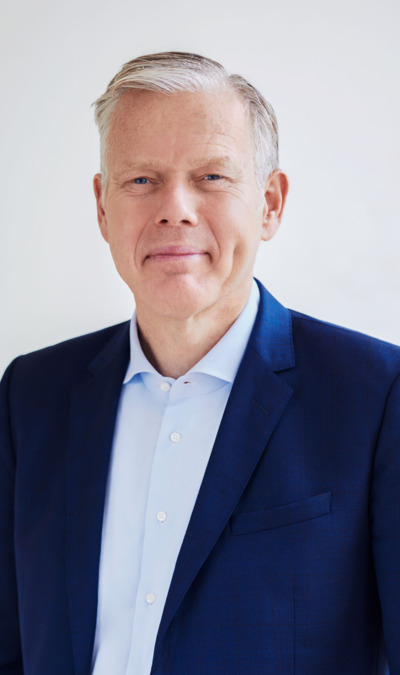
Our CEO Conrad Keijzer takes center stage in the latest issue of Handelsblatt, Germany's leading business newspaper, with a compelling guest column published on 14 August 2026. In it, Conrad makes a bold and timely argument: Europe's green transition isn't stalling because the right technologies are missing – it's stalling because green products are still too expensive, and not enough of the market rewards them.
Against a backdrop of record-breaking heatwaves, devastating wildfires across the continent, and the ongoing geopolitical weaponization of fossil fuels, Conrad calls for a fundamental shift in how Europe approaches its climate agenda. Rather than relying on ever-increasing subsidies, he argues for a three-pronged policy approach – greater transparency on product CO₂ footprints, targeted tax incentives such as reduced VAT on low-emission goods, and consistent green public procurement – combined with stronger industry collaboration along the value chain.
English translation
The energy transition cannot succeed on subsidies alone
To boost demand for green products, their prices must fall. Policy must also stimulate demand through tax incentives, argues Clariant CEO Conrad Keijzer.
This summer in Europe has been defined by record heat and devastating wildfires. In France, Spain, Portugal, Greece, Romania and the Netherlands, more than half a million hectares of forest have burned down and been lost for many years to come.
At the same time, the war in the Middle East is demonstrating how fossil raw materials are increasingly being used as a geopolitical weapon. Both developments show how urgently Europe must overcome its dependence on fossil energy and raw materials.
It is all the more striking, then, that Europe's climate transformation is currently losing momentum. The problem can no longer be attributed primarily to a lack of technical solutions. Many climate-friendly technologies are available or market-ready. The greater challenge lies in generating sufficient demand for low-CO₂ products and materials.
Europe therefore needs not only an energy transition that makes it more independent of oil and gas. It also needs a transformation of its raw material and material base.
Renewable raw materials and green hydrogen can reduce emissions, strengthen security of supply, and increase the resilience of European value chains. What will now be decisive is bringing these solutions to market faster and at competitive prices.
There is no shortage of green technologiesWhile the necessary technology exists, the industrial ecosystem required to actually deploy it is still in an early stage of development. Europe must therefore focus far more strongly on catching up and scaling in future-oriented fields. These include green hydrogen, sustainable fuels, and advanced materials – such as 100% bio-based surfactants for detergents and plant-based industrial waxes.
It is often argued that the energy transition is not advancing because companies invest too little in green technologies. The frequent conclusion is a call for even more state support. But this misses the point. The real problem is not a lack of available green technologies – it is that too few buyers are asking for them.
The supply of technologies has already developed to a remarkable extent. This is due in no small part to the fact that companies today operate under considerable pressure: extensive disclosure requirements, strict procurement standards, and ever-higher expectations along supply chains are forcing companies to invest in sustainability and decarbonization – thereby increasing the cost of climate-friendly products.
The next step will be critical: strengthening demand by making low-emission alternatives more competitive and more attractive. Early reforms to the emissions trading system and new support instruments are pointing in the right direction when it comes to reducing production costs.
Three levers to accelerate the energy transitionIndustry itself can contribute a great deal to reducing dependence on fossil raw materials. The European chemical industry possesses the technologies needed to achieve the goals of the European Green Deal.
The currently excessive costs can be reduced by better aligning production, logistics and market demand. New partnerships along the value chain also contribute to this – for example by establishing shared sustainability standards, as in the industry initiative "Together with Sustainability." In addition, investments in technologies for which a market willingness to pay already exists can generate significant leverage – for instance in the area of renewable raw materials in cosmetics.
Where markets cannot bear higher costs alone, policy support remains important. We see three levers as particularly effective: First, consumers need transparent information about the CO₂ footprint of products, so that sustainability can factor into purchasing decisions.
Second, targeted incentives – such as lower VAT rates for low-CO₂ products – can strengthen demand.
Third, public procurement should consistently favor low-emission solutions. In this way, government demand can develop new markets more quickly, enable economies of scale, and thereby accelerate the transformation.
Europe's problem is not a lack of technologies. Europe's problem is that the market too rarely rewards climate-friendly solutions. The next phase of the transformation will therefore not be decided by higher subsidies, but by lower costs, stronger demand, and the ability to bring green innovations to the mass market.