At Clariant, we are committed to creating Greater chemistry — between people and planet. As a leading specialty chemicals company, we see responsibly sourced renewable raw materials as essential to a more sustainable future. Palm oil, palm kernel oil, and their derivatives are important bio-based feedstocks used in many of our products, particularly within our Care Chemicals portfolio. As one of the world’s most land-efficient vegetable oil crops, palm oil can play an important role in reducing reliance on fossil-based resources when produced responsibly. While we represent a small share of global palm consumption, palm oil and its derivatives are one of our most important bio-based raw materials – and that makes responsible sourcing a key concern.
At the same time, we recognize the environmental and social challenges linked to palm cultivation, including deforestation, biodiversity loss, land-use change, labor rights concerns and impacts on local communities. We believe companies across the value chain have a responsibility to drive meaningful change, and Clariant is committed to helping lead this transformation through responsible sourcing, innovation, and collaboration.
We therefore focus on building a supply chain that is traceable, deforestation — and conversion-free, respectful of human rights, and supportive of smallholder livelihoods.
Our ambition
Meaningful change requires clear commitments — and the resolve to be held accountable for them. Clariant has a long-standing focus on advancing more sustainable palm oil sourcing and continues to strengthen its ambitions as we move toward 2030.
Building on the progress already achieved, we have expanded our targets to further improve traceability across our supply chain and drive transformation across the wider value chain.
Our key milestones include
*NDPE stands for No Deforestation, No Peat, No Exploitation.
- Reach and maintain 95% traceability to mills by 2026
- Transition to and maintain 100% sustainably sourced palm-based materials by 2030
- Aspire to build a fully NDPE*- and DCF**-aligned supply chain by 2032, supporting local livelihoods and respecting human rights
**DCF refers to Deforestation- and Conversion-Free sourcing.
How we manage responsible sourcing
Achieving our ambitions requires more than good intentions: it demands rigorous systems and accountability at every step. Therefore, sustainable sourcing of palm-based materials is embedded in Clariant’s governance and procurement systems. Oversight sits with our Sustainability Committee, including Board of Directors and CEO oversight, which regularly reviews risks, progress and strategic priorities linked to biodiversity and renewable raw materials.
Our expectations are set out in Clariant’s Global Policy on Sustainable Palm Oil and reinforced through our Supplier Code of Ethics. Considering Clariant’s position in the supply chain, the real risks – deforestation, exploitation of workers, loss of biodiversity – happen deep in the supply chain, that is why we require suppliers to work toward:
- Compliance with NDPE principles
- Greater transparency across their supply chains
- Respect for labor rights and human rights
- Participation in grievance resolution processes
- Independent verification of sustainability claims
Supplier performance is assessed through our Responsible Sourcing program using recognized external tools and industry platforms, including EcoVadis assessments and audit data through Together for Sustainability (TfS). Where gaps are identified, suppliers are expected to implement corrective action plans and demonstrate measurable improvement. Behind every assessment is a real question: are the forests still standing, and are the people in this supply chain being treated with dignity?
We also maintain the Clariant Integrity Line, a confidential speak-up channel open to employees, suppliers, contractors, and external stakeholders to report actual or suspected misconduct without fear of retaliation, with the option to report anonymously if preferred.
All of these systems exist for one reason: to ensure that our sourcing decisions protect forests, uphold human rights and create conditions where both people and nature can thrive.
Monitoring, verification and transparency
Transparency is essential for progress. Clariant uses increasing levels of traceability and digital monitoring to understand where raw materials originate and to identify environmental or social risks.
Deforestation and conversion-free performance is verified through satellite monitoring tools such as the Nusantara Atlas, using methodologies aligned with leading frameworks, including CDP and the Consumer Goods Forum Forest Positive Coalition. As part of our collaboration with ASD, we conduct an annual Transparency Investigation – a systematic review of our palm supply chain that maps sourcing networks, identifies deforestation risk, and tracks progress against our NDPE and DCF commitments. This ensures that our monitoring is not a snapshot, but an ongoing discipline.
Every two years, we also participate in the ASD Sustainable Palm Index (SPI) — a rigorous evaluation tool developed to assess suppliers' progress on supply chain transparency, sustainable sourcing practices, and compliance with NDPE principles. The SPI enables structured dialogue between Clariant and our suppliers, helping us identify where improvement is needed and supporting suppliers on their journey toward higher standards.
Together with industry and collaboration partners, we regularly assess our supply chain footprint and map sourcing networks to improve traceability to mills and plantations.
Our approach to grievance management reflects our belief that accountability must be matched by practical action on the ground. Where concerns arise, we apply a proactive grievance management approach together with suppliers and partners to identify and address environmental and social risks in our supply chain. Active cases are monitored, remediation actions are tracked, and escalation measures are applied when progress is insufficient. This reflects our belief that accountability must be matched by practical improvement on the ground. Clariant also publicly reports progress through its Integrated Report and Palm Progress Report.
Key partnerships
Collaboration is critical to transforming complex global supply chains. Clariant works with leading organizations to raise standards, improve traceability, and support industry-wide transformation:

Actions on the ground
Policies and traceability systems are strengthened through real-world action. Clariant supports landscape and smallholder initiatives in key sourcing regions such as Sabah in Malaysia and Riau in Indonesia to help advance a more traceable, resilient, and deforestation-free palm oil supply chain. Working together with partners, NGOs and local communities, we focus on forest conservation, sustainable agriculture, smallholder livelihoods and human rights — particularly in regions connected to our sourcing footprint, where we can drive the greatest impact. Because we know that lasting change is built not in boardrooms, but in the communities and forests where palm is grown. More information on our initiatives and partnerships is available in our Palm Progress Report.
Recognition
Our continuous efforts are recognized by leading external organizations:
- CDP Forests 2025: A rating
- ASD Sustainable Palm Index: A rating
- RSPO Shared Responsibility: Top score
- Responsible Care Award 2025
Earthworm Foundation
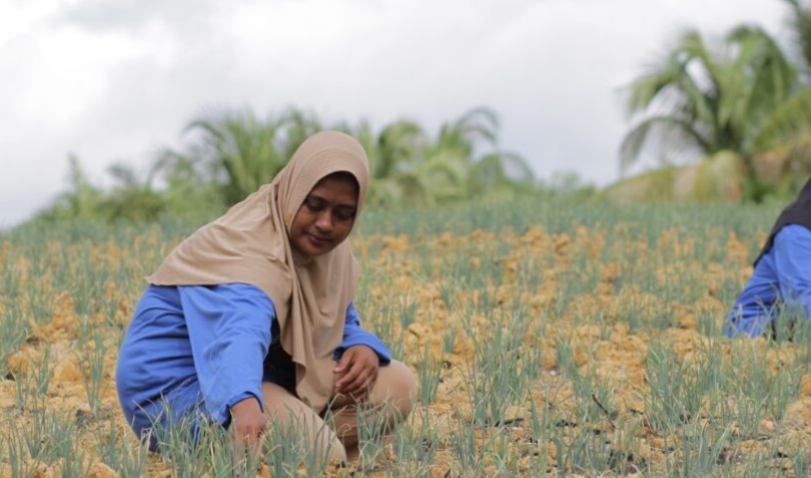
Unggul Mulyo Women Farmers Group
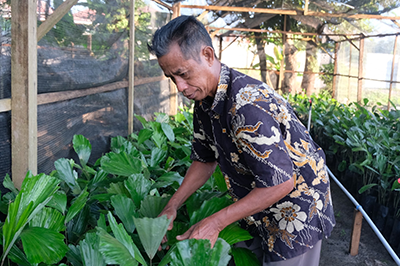
Kaleka Mosaik Initiative