
Behind the scenes: Clariant's global toll manufacturing transforms catalyst innovation into commercial reality
Delivering on Clariant's purpose »Greater chemistry - between people and planet.«
This story is an example of how Clariant delivers on its purpose-led strategy.
An Interview with Matthias Woersching, Head of EMEA and Business Development Custom Catalysts at Clariant
by Kristina Morgan, Global Marketing Manager, Petrochemicals at Clariant, and Julie Reinherr, Marketing Communications Manager at Clariant
We spoke with Matthias Woersching, Head of EMEA and Business Development Custom Catalysts at Clariant, to explore our toll and custom manufacturing capabilities. What we discovered was a fascinating story about how manufacturers can scale-up production without investing in capital equipment and expertise—and why putting customers at the center makes all the difference.
Kristina Morgan: Matthias, thank you for taking the time to speak with us today. To begin, let's cover the fundamentals—what exactly is toll manufacturing, and why is it important for companies to understand?
Matthias Woersching: Thanks for having me, Kristina and Julie. Toll manufacturing is essentially this: you have a company that has a catalyst recipe, a proven commercial formula, but that company doesn’t have the equipment or the facility to produce it on a commercial scale. That's where we can help: Think of it like using a professional kitchen when you want to launch a food product—you have the recipe and the cooking experience, we have the industrial ovens, mixers, and all the specialized equipment you'd need.
Kristina Morgan: That makes sense. I imagine the equipment required for catalyst manufacturing is considerably more sophisticated than kitchen appliances!
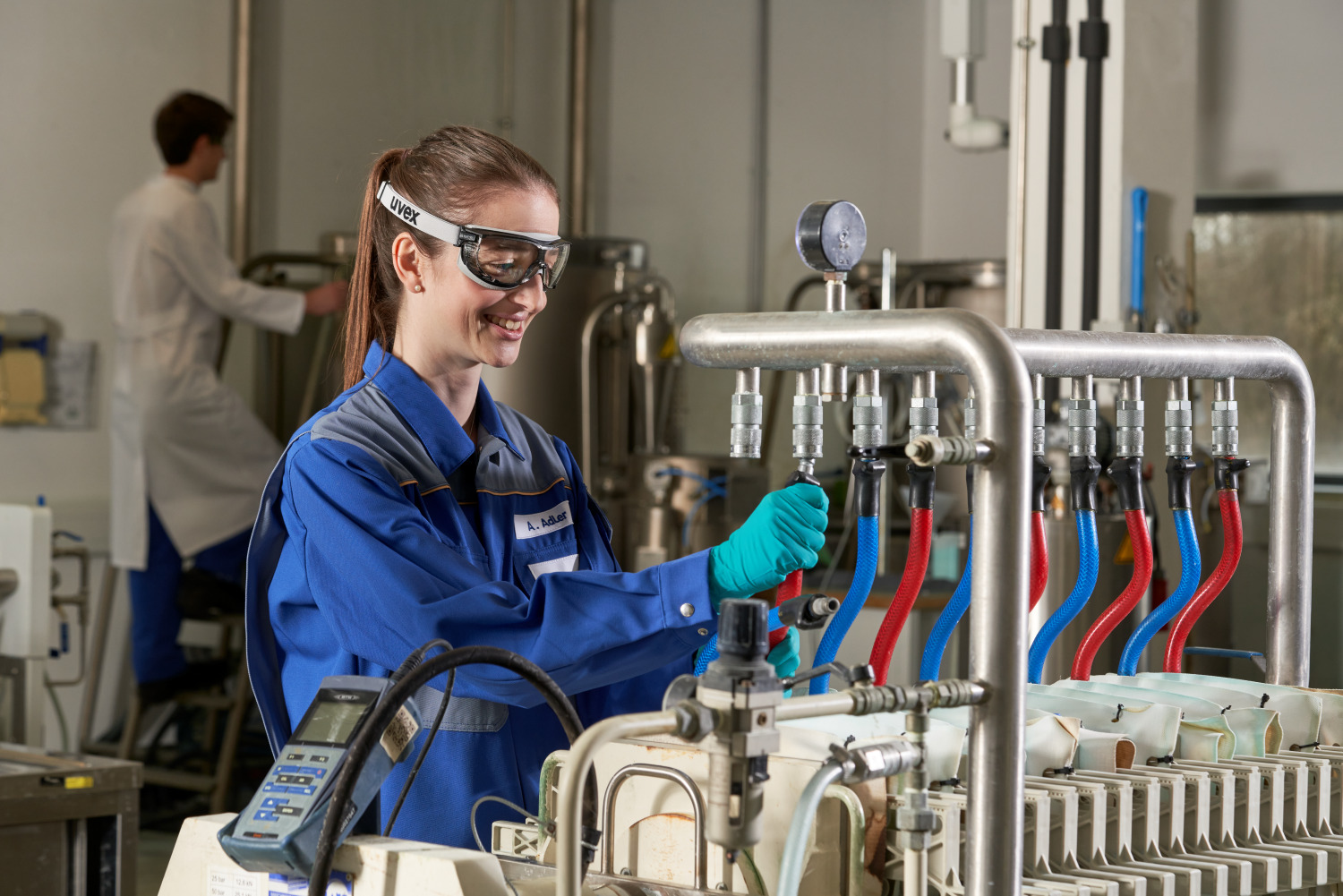
Matthias Woersching: Considerably more. We're talking about highly specialized machinery. Our facilities have been manufacturing catalysts and adsorbents for over 70 years, and we have equipment that many companies could not justify purchasing independently. This includes sigma blade mixers, hydraulic extruders, rotary calciners with NOx scrubbing systems, fixed bed reduction units—an extensive array of specialized equipment.
Julie Reinherr: Seventy years is impressive. What does that kind of experience really mean for our clients?
Matthias Woersching: It means our experience is extremely robust; we've handled extremely complex manufacturing processes. When you're working with catalysts, precision matters—temperatures, pressures, mixing times, everything must be just right. Our team knows how to troubleshoot issues before they become problems. That institutional knowledge is one of our most valuable assets – it can only be built over time.
However, experience alone isn't enough. What truly distinguishes our approach is how we apply that experience to each customer's unique situation. We don't simply provide access to our equipment and leave the customer to navigate the process independently. Instead, we partner with customers to thoroughly understand their specific challenges and objectives.
.png)
Julie Reinherr: Speaking of partnership, I read about our TST Group. Tell us about them.
Matthias Woersching: The TST Group—Technology Scaleup and Transfer—exemplifies our customer-centric approach. This team consists of dedicated engineers whose sole focus is ensuring customer production runs smoothly. Rather than managing multiple competing priorities, they concentrate on delivering the product correctly, according to customer specifications, and within customers’ timelines.
Kristina Morgan: It goes beyond equipment rental—you're gaining access to real expertise.
Matthias Woersching: Exactly! And that's crucial when you're scaling up from lab or pilot scale to commercial production. There can be surprises when you go from making kilograms to making tons. Our TST team has made this transition hundreds of times. They know how to optimize the process, maintain quality control, and keep everything running 24/7 if needed.
What truly sets them apart is their dedication to listening. They're not there to dictate how things should be done — they're there to understand customer requirements and identify the best path forward. Our customers’ success is, quite literally, at the core of their mission.
Julie Reinherr: That's refreshing. It sounds like you're fully invested in our customers' outcomes, not just processing orders.
Matthias Woersching: Absolutely. What we're offering is a true partnership. When they succeed, we succeed. If their product fails in the market, it doesn't matter how perfectly we manufactured it is—we both lose. So, we're invested in making sure they get exactly what they need, when they need it, at the quality level they require.
Kristina Morgan: Now, you mentioned that our facilities have been making catalysts for over 70 years. Do you also develop custom catalysts, or is it purely toll manufacturing?
Matthias Woersching: Good question! We do both. While toll manufacturing is one possibility — and what we're talking about today — we also have extensive development and manufacturing capabilities. Sometimes a customer comes to us and says, "We have this specific application, and we do not have any scale-up experience." That's a different conversation, where we're involved from the R&D phase all the way through to commercial production.
But the toll manufacturing service is really for customers who already have their formulation ready on a commercial level. They know what works; they just need someone who can do it on a commercial scale with the right equipment and expertise.
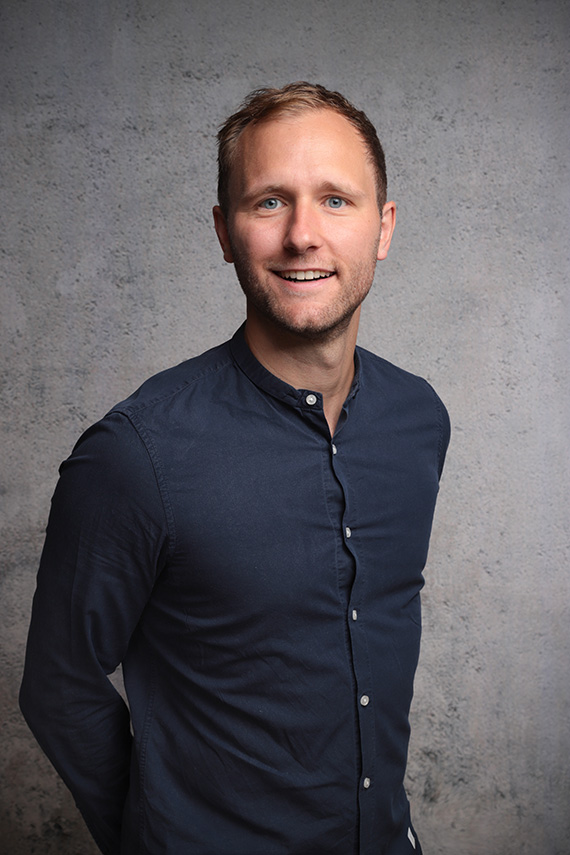
»We're not just a manufacturing facility, we're your global partner who brings 70 years of expertise, specialized equipment across multiple locations, and a team that's genuinely invested in your success.«
Matthias Woersching,
Head of EMEA and Business Development Custom Catalysts at Clariant
Julie Reinherr: So, Clariant can serve customers at different stages of their journey?
Matthias Woersching: Exactly. Whether you're still in the development phase and need our technical expertise to create a custom catalyst, or you already have a proven recipe and just need production capacity, we can help. It's all about meeting customers where they are and providing what they need at that moment.
Kristina Morgan: Let's talk about something that I know can be a customer concern—intellectual property. When handing over a proprietary formula to us, how do we protect it at Clariant?
Matthias Woersching: That's always one of the first questions we get, and rightfully so. Their formulation is their competitive advantage, and respecting that is fundamental to how we operate. We have stringent confidentiality protocols in place, and internally the information is shared on a very strict need-to-know basis only. We protect their IP like it were our own.
But beyond legal protection, it's about building trust. We want them to feel comfortable sharing the details we need to do the job right. That trust is earned through consistent action, transparency, and putting their interests first.
Julie Reinherr: Now, I noticed we have quite an extensive list of technical capabilities — everything from mixing and agglomeration to precipitation and passivation. Can you walk us through what that means for a client?
Matthias Woersching: Of course. Let's say a customer needs to make a catalyst that requires multiple processing steps. Maybe they need to mix raw materials using a sigma blade mixer, then extrude the mixture, calcine it at high temperatures with NOx scrubbing to meet environmental standards, reduce it in a fixed bed with hydrogen, and then passivate it for safe handling.
Most companies would need to invest millions in equipment and facilities to do all that in-house. With Clariant, they get access to all of it without the capital investment.
This is where our customer-centric philosophy becomes clear — we don't confine them to a standard process. We work closely with them to understand their exact specifications and then adapt our equipment and processes to meet those requirements. Their needs dictate how we operate, ensuring a truly customized solution.
Kristina Morgan: That flexibility must be crucial, especially when every company's product is different.
Matthias Woersching: It's everything. We could have the most sophisticated equipment available, but without adapting it to specific customer requirements, it serves no purpose. That's exactly why we prioritize flexible, custom solutions. Whether they need a small batch for market validation or large-scale continuous production, we adapt our capabilities to fit. Our equipment portfolio is diverse enough to support various production methods—tableting, pelletizing, spheroidizing, among others.
And our TST team works with customers to optimize the process for their specific requirements. They're not just executing a recipe — the TST team is collaborating with customers to make it better, more efficient, and more cost-effective.
Julie Reinherr: It sounds like Clariant is extremely focused on making our customers' lives easier.
Matthias Woersching: Exactly. Manufacturing is complex and demanding enough without adding unnecessary stress. Our role is to remove that burden from our customers’ shoulders, enabling them to concentrate on what they do best — developing outstanding products, building strong customer relationships, and growing their business—while we handle the manufacturing intricacies.
We operate 24/7 because customer deadlines don't always fit into a 9-to-5 schedule. We have extensive quality control testing capabilities because a customer’s reputation depends on consistent quality. We have in-house wastewater treatment and NOx scrubbing because you need to meet environmental standards. Everything we've built is designed around what our customers need.
Kristina Morgan: Clariant has locations all over the globe. How does that global presence benefit customers who need toll manufacturing services?
Matthias Woersching: That's one of our biggest advantages. We're not just a single facility—we have a global network of manufacturing sites with catalyst expertise. This means we can serve customers wherever they are, reducing shipping costs and lead times.
But it's more than just geography. With our global footprint, we handle the complexities of regional regulations, market requirements, and local business practices—so our customers don't have to.
Julie Reinherr: And I imagine having multiple sites also provides flexibility?
Matthias Woersching: Absolutely. If one site is at capacity or if there's a specific piece of equipment at another location that's better suited for our customers’ process, we have options. That global network gives us — and our customers — flexibility that a single-site operation just can't match. It's about being responsive and reliable, no matter where they are or what they need.
Kristina Morgan: You mentioned responsiveness. How does that play out in practice across different regions?
Matthias Woersching: It means we are there when our customers need us, regardless of time zone or location. With facilities around the world, we can provide local support and quick response times. If they have a question about their production run, they’re working with a team in their region who understands their market and can address issues in real-time.
We also have all quality control capabilities at our sites, so we can catch and address any issues before the product ships. That proactive approach protects our customers from costly problems down the line, no matter where they're located.
.png)
Julie Reinherr: If you had to sum up in one sentence why a company should choose Clariant for toll manufacturing, what would you say?
Matthias Woersching: I'd say: “We're not just a manufacturing facility — we're your global partner who brings 70 years of expertise, specialized equipment across multiple locations, and a team that's genuinely invested in your success.”
Kristina Morgan: That really captures the customer-centric philosophy you've been describing. Last question, what's next? Any exciting developments on the horizon?
Matthias Woersching: We're always listening to our customers and looking at ways to expand our capabilities based on what they need. The catalyst industry is evolving, especially with the push toward sustainability. We're investing in technologies and processes across our global network that will help our clients meet those future demands whether that's through toll manufacturing, custom catalyst development, or both.
But the most exciting development is continuing to deepen our partnerships with customers around the world. Every project teaches us something new, and we use those insights to serve the next customer even better. That continuous improvement mindset, driven by customer feedback, is what keeps us moving forward.
Julie Reinherr: Matthias, thank you so much for your time and for giving us this inside look at toll manufacturing and at what it really means to put customers first.
Matthias Woersching: My pleasure, Kristina and Julie. Thanks for the great questions!
For more information about Clariant's toll manufacturing services, visit https://www.clariant.com/en/Business-Units/Catalysts/Custom-Catalysts.