


MINUTE STRUCTURES. MONUMENTAL CHANGE.
What if the smallest structures could create the biggest impact? In nature, a butterfly emerges from its chrysalis through countless invisible molecular shifts – a transformation that happens at a scale we cannot see and yet creates something remarkable.
In industry, zeolites work the same way. These crystalline structures – built from silicon, oxygen, and aluminum – are the silent architects of transformation at the molecular level. Their intricate pore networks act as 'molecular sieves,' guiding and reshaping molecules with extraordinary precision to transform how we make chemicals, reduce emissions, and build a sustainable future.

Clariant zeolites: Precision-engineered solutions with global reach
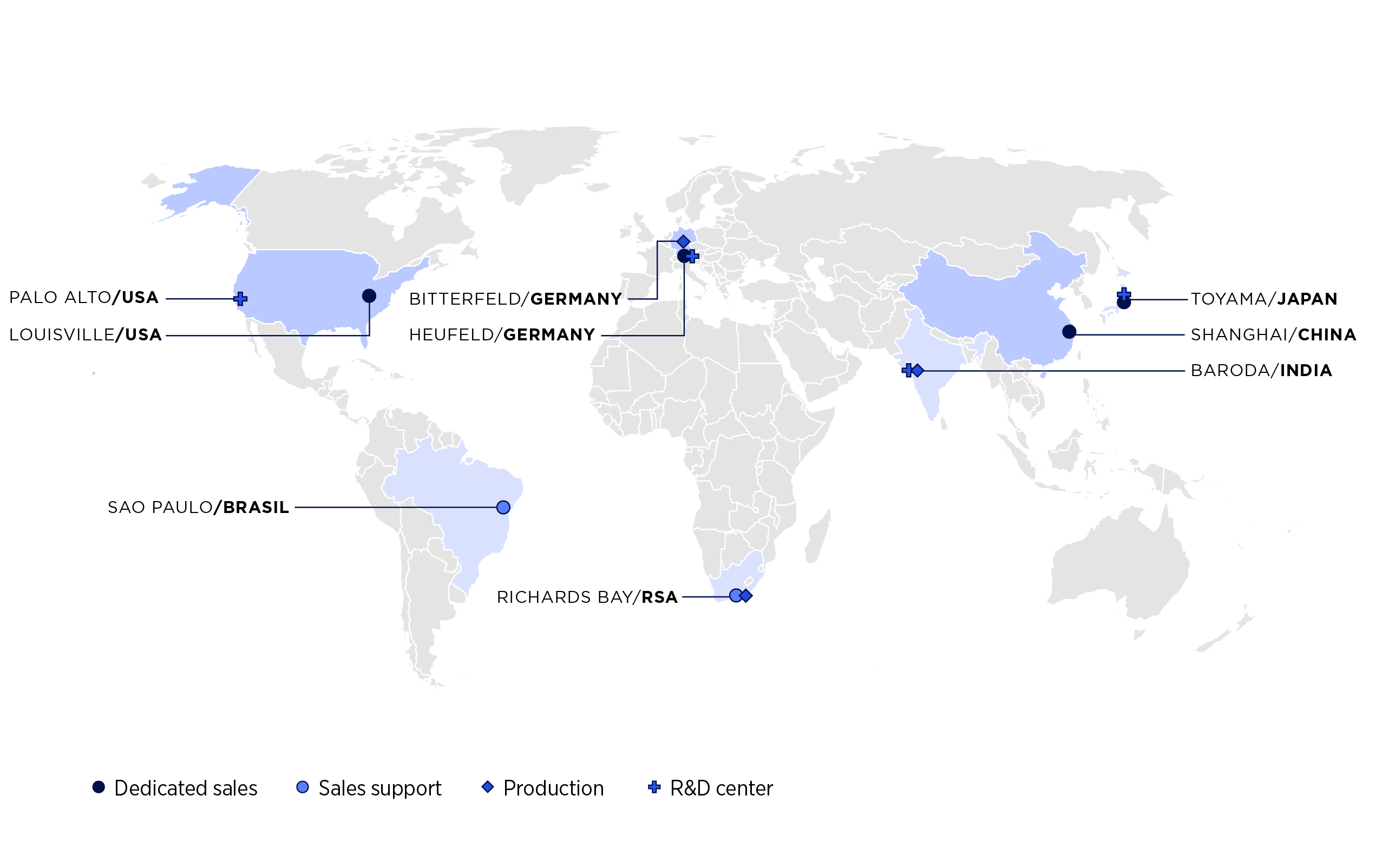
Our global research and production network enables fast, collaborative development of zeolite-based catalysts and adsorbents tailored to your needs.
Whether you're innovating breakthrough processes or optimizing plant operations, Clariant provides custom synthesis services, consistent quality, and expert support at every scale—worldwide.
Catalyzing sustainable transformation for a greener future
WHITEPAPER
As industries strive to reduce their environmental footprint and align with global sustainability goals, innovative solutions are crucial for enabling sustainable transformations. Clariant, a leading specialty chemicals company, has developed cutting-edge zeolite solutions that address key sustainability challenges across various sectors, including aviation, plastics, and industrial emissions control.
This white paper explores Clariant’s zeolite catalysts and their role in enabling the production of sustainable aviation fuel (SAF), carbon-neutral plastics, and effective industrial emission control systems. Leveraging the unique properties of zeolites, these solutions facilitate the use of renewable feedstocks, increase process efficiency, and minimize harmful emissions, contributing to a more sustainable future.
Zeolite Videos
Using MFI zeolites for carbon-neutral plastics
Plastics are essential materials of modern life, but their production emits significant amounts of CO2 and other greenhouse gases. By harnessing the unique pore structure of MFI zeolites, biobased alcohols made with green energy can be turned into more sustainable, carbon-neutral plastics.
Turning cooking oils into green jet fuels with AEL zeolites
Air travel is vital to global connectivity but also a major source of emissions. With the help of AEL zeolites, used cooking oils from homes, restaurants and industry can be turned into clean-burning aviation fuels.
Using MFI Zeolites to trap harmful car odors
Some people enjoy that “new car smell”, but it’s actually a mix of volatile organic compounds (VOCs), some of which can be harmful. With MFI zeolites, manufacturers can reduce these emissions and create cleaner, safer car interiors.
Enhancing plastic recycling with MFI zeolites
One of the biggest challenges in plastic recycling is sorting mixed waste. By using MFI zeolites in catalytic pyrolysis, plastics can be chemically recycled more efficiently and turned back into valuable hydrocarbon feedstocks.
Controlling industrial emissions with BEA zeolites
Industrial processes release various pollutants and greenhouse gases. Among the most harmful are nitrogen oxides (NOx) and nitrous oxide (N₂O), both major contributors to air pollution and climate change. With BEA zeolites, these gases can be converted into harmless compounds.
Standard zeolites: A highly versatile family of crystalline materials
Thanks to their microporous structure and versatile characteristics, Clariant’s standard zeolites are used as adsorbents, additives, and catalysts for numerous purposes in industrial production.
Reducing harmful emissions, providing sustainable fuels
Zeolites help to protect our environment:
- They support the transition from fossil-based to sustainably produced fuels, petrochemicals, and chemicals.
- Metal-exchanged zeolites convert NOX and N2O emissions from mobile and stationary engines into harmless substances.
- Highly hydrophobic zeolite materials effectively reduce VOC emissions.
Standard zeolites, tailored to suit your needs
Clariant’s technical team can tailor the chemical and physical properties of standard zeolite structures to ensure they suit your needs. This way, Clariant can support your industrial and R&D projects with standard zeolite products.
Special-grade zeolites: Meeting your specific requirements
Clariant offers a wide technical portfolio to develop and commercially manufacture virtually any zeolite that meets your specific requirements. Special-grade zeolites have been developed to a scalable R&D recipe or can be produced on customer request. Please contact your Clariant sales representatives for further details.
Customizing, scaling up, and developing new zeolites for you
The roots of Clariant’s zeolite business are in Germany and South Africa: In the 1980s, the Germany-based R&D team developed a custom catalyst which became Clariant’s first commercial zeolite product. It was then scaled up and produced at one of our production sites in South Africa.
Since then, Clariant technical teams at three R&D sites and multiple production locations have developed a toolset that allows for fundamental supportive work with our customers to bring an idea from R&D to commercial production.
Clariant’s offers:
- Free-of-charge “try-out” samples from commercial production
- Modifying our standard zeolite powders
- Scaling up your laboratory-scale zeolite recipe to commercial production
- Developing and producing zeolites that meet your needs for entirely new applications
- Applying Clariant’s forming technologies to select zeolite powders to suit commercial production processes
During a custom project, Clariant follows a rigorous protocol to maintain confidentiality and to protect our customers’ intellectual property. Internal firewalls make sure all project information remains confidential.
Clariant's global zeolite specialists provide comprehensive technical support in selecting, modifying, developing, and incorporating the optimal zeolite into a diverse range of applications.
Rigorous quality control
Principles and CertificationsClariant’s zeolites are manufactured in state-of-the-art plants in Bitterfeld (Germany) and Richards Bay (South Africa). Both plants are dedicated exclusively to zeolites.
The zeolite production process is certified according to ISO 9001, ISO 14001, and ISO 45001.
Rigorous quality control is a part of every production step: Advanced analytical equipment as well as modern laboratory and pilot-plant testing facilities are used for quality control. The dedicated testing equipment comprises continuous-flow fixed-bed reactors for once-through or recycle operation at isothermal or adiabatic conditions. This allows us to simulate almost every catalytic reaction.
Discover the full potential or our zeolite technology
Get in contact with our Clariant Zeolites Experts
Roderik Althoff
You are in EMEA region?
Contact Roderik
Chelsey Del Grosso
You are in Americas region?
Contact Chelsey
Ong Chin Wern
You are in APAC region?
Contact ChinWern
Frequently asked questions
FAQ - Clariant zeolites: zeolite fundamentals, properties, types and industrial applications explained
Clariant is one of the world's leading independent producers of specialty zeolite. With over 60 years of zeolite development and manufacturing expertise, Clariant's capability spans the complete technical value chain: from precise control of zeolite structure — pore size, pore shape, and channel dimension — through compositional tuning of acidity, redox behavior, and hydrophilic character, to post-synthetic modifications including thermal treatment, ion exchange, dealumination, and selectivation.
Clariant produces zeolite powders and extrudates for use in petrochemicals, oil refining, chemicals processing, adsorption of gases and liquids, and emission control
.The portfolio spans several standard framework types including MFI, BEA, MOR, CHA, FAU, ERI, LTL, AEL, MTW, and MTT, with custom modification capabilities across all series.
Clariant combines four key differentiators: a broad product portfolio with several framework types with full customization capability and the ability to match any required SiO2/Al2O3 ratio or ion/metal exchange; proven commercial scale, over 60 years of commercial zeolite production experience, and key partnerships established with major producers; proven sustainability impact — more than 35 zeolite-based N2O tertiary abatement catalyst installations across 19 countries, eliminating 20 million metric tons of CO2-equivalent annually; and end-to-end technical support — from laboratory sample through commercial production with IP protection.
Clariant specialty zeolite powders are active across seven distinct industrial application areas:
- Emission Control — Industrial and Automotive. Zeolites are central to the reduction of NOx, N2O, and VOCs from industrial off-gas and automotive exhaust systems. Iron- or Copper-modified zeolites deliver selective catalytic reduction (SCR) of NOx to harmless nitrogen and water vapor. Zeolite-based tertiary N2O abatement catalysts achieve conversion rates up to 99% and even beyond, proven across more than 35 commercial installations in 19 countries.
- Refining and Petrochemicals. MFI, BEA, MOR, and AEL zeolites are used across fuel upgrading, isomerization, dewaxing, alkylation, disproportionation of aromatics, and production of petrochemical intermediates — serving refineries and petrochemical producers globally.
- Sustainable Aviation Fuel (SAF) and Green Olefins. AEL, MTT, MTW structures play a crucial role in the isomerization step of the HEFA (Hydroprocessed Esters and Fatty Acids) SAF production route. MFI zeolites additionally support the Alcohol-to-Jet (AtJ) and Methanol-to-Jet (MtJ) SAF routes, as well as Methanol-to-Propylene (MTP) for renewable olefin production.
- Carbon-Neutral and Circular Plastics. MFI zeolite catalysts enable the Ethanol-to-Olefins (ETO) process — converting renewable, plant-based ethanol and other bio-based alcohols into ethylene and propylene, the building blocks for carbon-neutral plastics. MFI structured zeolites also support advanced plastic recycling through catalytic pyrolysis, enabling circular chemistry at industrial scale.
- Chemicals Processing and Air Separation. Zeolites including BEA, MFI, and MOR serve fine chemicals synthesis and chemical processing applications. FAU-type zeolites (LiLSX/LiCZF 2) — with the highest surface area in Clariant's portfolio at greater than 600 m²/g — are used specifically for air separation.
- Odor Removal and Active Carbon Replacement. Clariant's standard zeolite series including
—BEA, CHA, FAU, MFI, and MOR — are used as active carbon replacements in odor control and industrial adsorption applications, offering superior selectivity, regenerability, and a more sustainable alternative to activated carbon.
Clariant's zeolites are manufactured in state-of-the-art plants in Bitterfeld, Germany and Richards Bay, South Africa — both plants dedicated exclusively to zeolite production. Zeolite production at both sites is certified according to ISO 9001 (quality management), ISO 14001 (environmental management), and ISO 45001 (occupational health and safety management). In addition, elements of ISO/TS 16949 are implemented to further support the quality management system, with particular emphasis on continual improvement, defect prevention, and reduction of variation and waste.
Zeolites are aluminosilicate crystals with unique structures consisting of well-defined channels and pores, making them excellent choices for a wide variety of applications in catalysis and adsorption. More precisely, zeolites are characterized by -Si-O-Al- linkages that form surface pores with uniform diameters, typically ranging from 2 to 12 Å. These structures enclose regular internal cavities and channels of specific sizes and shapes, enabling them to function as shape-selective catalysts
With high surface area and porosity, zeolites behave as molecular sieves — allowing small molecules to pass through while stopping larger molecules, making them highly useful for the adsorption of gases and liquids. Activated ingredients impregnated into the crystalline framework further provide an environment for specific chemistries to occur.
Five unique properties have ensured the commercial success of zeolites — and define why Clariant zeolites are deployed across such a wide range of industries:
- High-surface-area microporosity — enabling molecular-level adsorption and catalytic reactions at extraordinary efficiency
- Solid-acid catalysis — providing strong Brønsted and Lewis acid sites for chemical transformations
- Ion-exchangeability including metals — enabling loading of active metals such as Fe, Cu, and Pt; Clariant offers Fe and Cu exchanged types across BEA and MFI series as standard, with other metals and structures available on request
- Hydrophobicity — tunable by framework composition to selectively adsorb organic molecules over water; Clariant's high-ratio CZP 200 and CZP 800 grades leverage this for industrial odor removal and VOC control
- Adsorption/desorption — reversible uptake and release of molecules critical for catalytic and separation applications
The chemical and physical properties of a zeolite vary by composition — specifically the Si/Al ratio, the cation form (H+, NH4+, Na+, etc.), and any guest metals incorporated (Fe, Cu, Pt, etc.). The exchange of cations by protons within the zeolite structure generates strongly acidic sites; both the number and strength of these acid sites are directly influenced by the Si/Al ratio.
A lower Si/Al ratio produces a higher density of acid sites and greater hydrophilicity; a higher Si/Al ratio yields greater hydrothermal stability and hydrophobicity.
Clariant's MFI series (CZP) covers SiO2/Al2O3 ratios from 22 to over 800 — one of the broadest ranges commercially available for any single zeolite framework — enabling precise tuning for each specific industrial requirement.
Clariant produces specialty zeolite powders through chemical synthesis using silica and alumina sources. The core process involves the crystallization of sodium aluminosilicate gels, prepared from pure sodium aluminate, sodium silicate, and sodium hydroxide solutions.
At Clariant's dedicated zeolite manufacturing plant in Bitterfeld, Germany, this process is executed at industrial scale. Clariant's Richards Bay plant in South Africa additionally offers forming and impregnation capabilities, including extrusion into shaped bodies for specific catalyst applications.
Clariant's standard commercial zeolite portfolio spans ten framework types, organized as follows:
Standard Zeolites:
- CZP-Series — MFI (Pentasil / ZSM-5)
- CZB-Series — BEA (Beta)
- CZM-Series — MOR (Mordenite)
- CZC-Series — CHA (Chabazite / TiAPSO-34)
- CZF-Series — FAU (Faujasite / LiLSX)
- CZE-Series — ERI (Erionite)
- CZL-Series — LTL (Linde Type L)
- CZA-Series — AEL (TiSAPO-11)
Special-Grade Zeolites:
- MTW (ZSM-12)
- MTT (ZSM-23)
All series are available with modifications to SiO2/Al2O3 ratio, ion and metal exchanges, and additional post-synthetic treatments as customizing options. Custom zeolite synthesis and entirely new framework development are also available through Clariant's co-development program.
FAQ - Clariant zeolite types: BEA, MFI, MOR, CHA, FAU, AEL, ERI, MTW & MTT — structures, products & applications
Beta zeolite (BEA) is a high-silica zeolite with a unique 3-dimensional 12-ring pore structure and a channel opening of 7 Å. Its 3-dimensional intersecting channel system facilitates efficient diffusion of reactant and product molecules, while its strong Brønsted acidity makes it highly active for acid-catalyzed reactions.
Key Properties: Pore structure: 3-dimensional | Opening: 7 Å | SiO2/Al2O3: 25–150 | Surface area: >500 m²/g | Chemical form: Na, NH4, H | LOI 1000°C: <10% wt.
Products: CZB 25 (SiO2/Al2O3: 25) | CZB 30 (ratio: 30) | CZB 150 (ratio: 150) Fe and Cu exchanged types available; other metals on request.
Markets: Automotive off-gas treatment | Industrial off-gas control | NOx SCR (iron-modified BEA) | Fuel upgrading | Industrial production
Clariant's iron-modified Beta zeolite catalysts for Selective Catalytic Reduction (SCR) of NOx enable the efficient reduction of NOx to harmless nitrogen and water vapor using ammonia as a reducing agent. The unique pore structure and acidity of Beta zeolite, combined with the iron active sites, facilitate the adsorption and activation of NOx and ammonia, enabling highly efficient reduction reactions.
Clariant's zeolite-based emission control catalysts — including iron-modified BEA — achieve N2O and NOx conversion rates exceeding up to 99% and even beyond.
MFI (Pentasil/ZSM-5) features a 3-dimensional 10-ring channel system with an approximately 5.5 Å pore opening and an exceptionally wide range of accessible SiO2/Al2O3 ratios — from 20 to over 1,000. This tunable range makes MFI the most versatile zeolite in Clariant's portfolio, enabling applications from strongly acidic low-ratio catalysts to near-neutral high-ratio hydrophobic adsorbents. MFI is the most commercially deployed zeolite framework globally, and Clariant draws on over 30 years of commercial MFI production experience.
Key Properties: Pore structure: 3-dimensional | Opening: ~5.5–6 Å | SiO2/Al2O3: 20–1,000 | Surface area: >300 m²/g | Chemical form: Na, NH4, H | LOI 1000°C: <10% wt.
Products: CZP 27 (SiO2/Al2O3: 22–27) | CZP 30 (25–30) | CZP 90 (80–100) | CZP 200 (>200) | CZP 800 (>800) Fe and Cu exchanged types available; other metals on request.
Markets: Industrial VOC, NOx, and N2O reduction | Automotive emission control | Odor removal / active carbon replacement | Refining and petrochemicals | ETO for carbon-neutral plastics | Alcohol-to-Jet SAF route | MTP
Clariant's MFI zeolite catalysts enable the Ethanol-to-Olefins (ETO) process, which converts plant-based ethanol into valuable olefins — mainly ethylene and propylene — the building blocks for various plastics, with water as the chief byproduct.
The MFI zeolite's unique pore structure and acidity facilitate the dehydration of ethanol to ethylene, followed by oligomerization and cracking reactions to produce a range of olefins.
Mordenite is one of the earliest zeolites commercialized for solid-acid catalysis, distinguished by its 1-dimensional 12-ring channel system with a 7 Å pore opening. Unlike the 3-dimensional frameworks of BEA and MFI, Mordenite's 1-dimensional pore arrangement provides a unique shape selectivity for discrimination of molecules by size and structure along a single axis — particularly advantageous for certain isomerization reactions.
Key Properties: Pore structure: 1-dimensional | Opening: 7 Å | SiO2/Al2O3: 25–200 | Surface area: >400 m²/g | Chemical form: Na, NH4, H | LOI 1000°C: <15% wt.
Products: NaCZM 16 (SiO2/Al2O3: 16) | CZM 20 (ratio: 20) | CZM 40 (ratio: 40)
Markets: Automotive emission control | Industrial VOC removal | Isomerization of alkanes and aromatics | Fuel upgrading | Production of petrochemical intermediates
Chabazite (CHA) is a small-pore zeolite with a 3-dimensional 8-ring channel system and a 4 Å pore opening. Its small pore size provides highly selective molecular access — allowing small molecules such as NOx and ammonia to enter and react while excluding larger hydrocarbons.
Clariant's proprietary product CZC (TiAPSO-34) is a silicoaluminophosphate zeotype incorporating Titanium and Phosphorus within the framework, yielding exceptional hydrothermal stability.
Key Properties: Pore structure: 3-dimensional | Opening: 4 Å | Surface area: >400 m²/g | Chemical form: H | LOI 1000°C: <35% wt.
Product: CZC (also known as SCT 323 / TiAPSO-34)
Markets: Automotive emission control | Hydrocarbon adsorption heat management | Methanol-to-Olefins (MTO)
Faujasite (FAU) is a large-pore zeolite with a 3-dimensional 12-ring channel system and an 8 Å pore opening The lithium cation form provides superior nitrogen adsorption selectivity over oxygen, making it the material of choice for air separation.
Key Properties: Pore structure: 3-dimensional | Opening: 8 Å | SiO2/Al2O3: 2 | Surface area: >600 m²/g | Chemical form: Li | LOI 1000°C: <15% wt.
Product: LiCZF 2
Market: Air separation
AEL is a silicoaluminophosphate (SAPO) zeotype — meaning its framework incorporates silicon, aluminum, and phosphorus rather than the purely aluminosilicate framework of classical zeolites. This composition delivers mild Brønsted acidity combined with a 1-dimensional 10-ring channel system and a 5 Å pore opening. The mild acidity and shape-selective pore geometry make AEL particularly effective for isomerization reactions requiring high selectivity without unwanted cracking, such as dewaxing and sustainable aviation fuel production.
Key Properties: Pore structure: 1-dimensional | Opening: 5 Å | Surface area: >200 m²/g | Chemical form: H | LOI 1000°C: <15% wt.
Product: CZA (alternate name: Ti-SAPO-11)
Erionite (ERI) is a small-pore zeolite with a 3-dimensional channel system and a 4 Å pore opening. Its ammonium cation form and moderate SiO2/Al2O3 ratio of 7 make it suited for adsorption and active carbon replacement applications where selective uptake of small molecules is required.
Key Properties: Pore structure: 3-dimensional | Opening: 4 Å | SiO2/Al2O3: 7 | Surface area: >400 m²/g | Chemical form: NH4 | LOI 1000°C: <22% wt.
Product: CZE 7
Markets: Adsorption | Active carbon replacement
MTW (ZSM-12) is used in specialty catalytic applications including alkylation and isomerization of aromatic compounds. MTT (ZSM-23) is used in fuel dewaxing and isomerization, contributing to the production of high-grade lube base oil stocks.
FAQ - Clariant zeolites: Reducing N2O & NOx emissions and enabling SAF and carbon-neutral plastics
As stated in Clariant's sustainability whitepaper, Clariant has developed cutting-edge zeolite solutions that address key sustainability challenges across three sectors: aviation, plastics, and industrial emission control. These solutions facilitate the use of renewable feedstocks, increase process efficiency, and minimize harmful emissions — contributing to a more sustainable future.
The three core sustainability contributions are:
- AEL-type zeolite catalysts for converting waste oils into high-quality SAF components via the HEFA route
- MFI zeolite catalysts enabling the ETO process for producing carbon-neutral plastics from renewable plant-based alcohols
- Iron-modified Beta zeolite catalysts for SCR systems achieving high NOx removal efficiency and reduced operational costs
N2O (nitrous oxide) is a greenhouse gas 265–298 times more harmful to the climate than CO2. Annual N2O emissions from nitric and adipic acid production represent more than 100 million metric tons of CO2-equivalent — approximately 0.2% of global CO2-equivalent emissions. Yet more than 50% of the world's approximately 500 nitric acid plants still operate without N2O abatement.
Clariant's EnviCat zeolite-based tertiary N2O abatement catalysts — based on iron exchanged on zeolite frameworks — remove greater than 99% of N2O from industrial off-gas at operating temperatures of 340–500°C, with no precious metals required. More than 35 installations across 19 countries collectively reduce emissions by 20 million metric tons of CO2-equivalent annually.
Clariant's zeolite-based emission control catalysts deliver the following proven performance, confirmed across commercial installations:
- N2O and NOx conversion rates exceeding 99%
- 35+ installations across 19 countries: Netherlands, UK, Germany, Austria, Hungary, Portugal, Italy, Turkey, South Korea, USA, China, Pakistan, Egypt, Vietnam, India, Trinidad, Indonesia, South Africa, Chile
- 20 million metric tons of CO2-equivalent reduced annually
- Composition of silicon, aluminum, oxygen, and iron — without precious metals — contributing to a smaller ecological footprint
The production of conventional plastics from fossil fuels contributes to greenhouse gas emissions and environmental pollution. Renewable feedstocks — such as plant-based alcohols (e.g., ethanol and butanol) and biomass-derived sugars — offer a promising pathway for producing carbon-neutral plastics with a significantly lower environmental impact.
Clariant's MFI zeolite catalysts enable the Ethanol-to-Olefins (ETO) process, which converts plant-based ethanol into valuable olefins, the building blocks for various plastics — with water as the chief byproduct.
Three key features of Clariant's MFI zeolites make them uniquely suited for this process:
- Shape selectivity and pore structure — the ~5.5 Å pore diameter controls product distribution by selectively allowing desired ethanol and intermediate molecules to diffuse through while restricting the formation of larger, unwanted hydrocarbon chains
- Tunable acidity — the broad SiO2/Al2O3 range of the CZP series (22 to over 800) allows precise optimization of acid site density and strength for maximum ethylene and propylene selectivity
- High temperature stability and regenerability — critical for industrial-scale continuous ETO operation where high process temperatures and repeated catalyst regeneration cycles are required
Beyond the ETO process, Clariant MFI zeolites also support advanced plastic recycling through catalytic pyrolysis — converting plastic waste back into valuable chemical building blocks and enabling circular chemistry at industrial scale. Clariant is additionally a supplier to the Methanol-to-Propylene (MTP).