
Halal-certified beauty: A fast-growing global market opportunity

Delivering on Clariant's purpose »Greater chemistry - between people and planet.«
This story is an example of how Clariant delivers on its purpose-led strategy.
The beauty industry is experiencing strong growth in certified product segments that emphasize supply-chain transparency, documented manufacturing standards, and globally recognized compliance frameworks. Among these, halal-certified cosmetics are emerging as one of the fastest growing opportunities for international beauty brands and ingredient suppliers.
For companies targeting expansion in Asia, the Middle East, and increasingly global distribution channels, halal certification is becoming a strategic market-access requirement.
A market expanding at double-digit growth
The scale of the opportunity is substantial. According to several industry analyses, the global halal cosmetics market was valued at approximately USD 47–53 billion in 2024–2025 and is projected to exceed USD 115 billion by the early 2030s, reflecting compound annual growth rates of around 11–12%.
Long-term projections suggest the market could reach USD 150 billion by 2035, illustrating sustained demand for certified beauty products across skincare, haircare, and color cosmetics categories.
A key driver of this expansion is the rapid growth of certified consumer product segments worldwide. Spending on beauty and personal care products aligned with halal standards reached USD 87 billion in 2023 and is expected to approach USD 118 billion by 2028, according to the State of the Global Islamic Economy Report.
Regionally, Asia-Pacific dominates the market, accounting for more than 64% of global halal cosmetics demand in 2025, making it the most important growth region for brands integrating certification into their product strategies.
Several macro trends are supporting this growth:
- increasing demand for ingredient traceability and transparent sourcing
- rising disposable income in Southeast Asia and the Middle East
- expanding distribution of certified cosmetics through global retail channels
- stronger regulatory frameworks in key consumer markets
Certification and the shift toward transparent beauty
Across international beauty markets, certification schemes are increasingly valued as mechanisms that support product integrity, safety, and supply-chain transparency.
Halal certification frameworks require detailed documentation of:
- ingredient sourcing and processing
- manufacturing and contamination controls
- storage and distribution practices
- traceable supply chains
These requirements align closely with broader industry trends such as clean beauty, ethical sourcing, and responsible formulation.
Regulatory momentum accelerates market demand
Regulation is another key factor shaping the growth of halal-certified cosmetics.
Indonesia, one of the world’s largest beauty markets, has introduced one of the most comprehensive frameworks through its Halal Product Assurance system. Under Government Regulation No. 42 of 2024, cosmetics sold in the country must obtain halal certification by October 2026, including imported products distributed in the Indonesian market.This regulation is expected to significantly increase demand for certified ingredients, formulations, and finished products as global brands prepare for compliance.
Indonesia’s regulatory framework also illustrates a broader trend: certification is increasingly tied to market entry and distribution eligibility in high-growth regions.
Implications for the beauty supply chain
The expansion of halal-certified cosmetics is influencing not only brands but also the ingredient and formulation supply chain.
For specialty ingredient manufacturers and chemical suppliers, certification supports:
- expanded market access for customers
- simplified regulatory pathways in key markets
- differentiation in ingredient portfolios
- stronger documentation for supply-chain transparency
As more brands incorporate certification requirements into product development, suppliers capable of delivering certified ingredients and compliant production processes play an increasingly important role in enabling global market expansion.
How Clariant supports certified beauty innovation
Ingredient manufacturers are responding to this shift by strengthening certification readiness across their product portfolios and production networks.
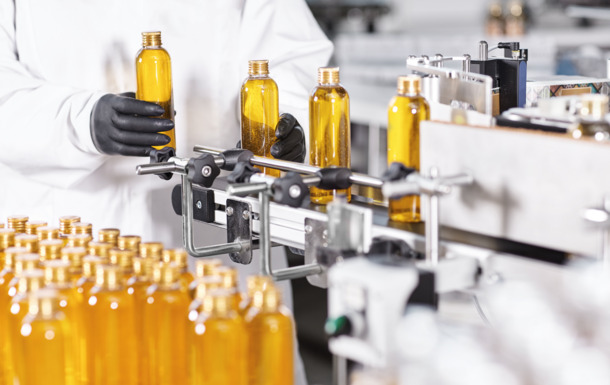
Clariant has developed a range of halal-certified cosmetic ingredients designed to support brands seeking to access regulated markets and meet evolving certification standards. By ensuring that manufacturing processes and documentation comply with recognized certification frameworks, the company enables customers to develop formulations aligned with halal requirements while maintaining performance and formulation flexibility.
Clariant’s approach combines several key elements:
- halal-certified production sites that ensure traceability from manufacturing to delivery
- certified cosmetic ingredients covering surfactants, rheology modifiers, preservatives, UV filters and functional additives
- technical and regulatory support to help brands navigate certification and documentation requirements
- formulation expertise to accelerate development of compliant beauty products
This integrated support helps beauty manufacturers bring certified products to market faster while ensuring compliance with the regulatory frameworks emerging across high-growth regions.
Looking ahead
Halal-certified cosmetics are expected to remain one of the most dynamic segments of the global beauty industry over the next decade. Driven by expanding consumer markets, stronger regulatory frameworks, and growing demand for transparent supply chains, certification is increasingly becoming a strategic tool for companies pursuing international growth.
For beauty brands, manufacturers, and ingredient suppliers alike, the opportunity lies in recognizing halal certification not only as a compliance requirement but also as a powerful enabler of global market expansion.