
Reduce paving temperature and energy consumption in asphalt production with Licomont BS 100
Licomont BS 100 is a specialty amide wax additive developed by Clariant for bitumen modification in road construction. Added at 3% to standard bitumen, it raises the softening point from around 50 to over 90° C, reduces needle penetration, and lowers processing viscosity, enabling reduced paving temperatures and shorter mixing times. The result is asphalt with greater deformation resistance, lower wheel track formation under heavy axle loads, and reliable cold-temperature stability for long-life road infrastructure.
Why standard bitumen is no longer enough: the case for modification
Modern road infrastructure faces growing mechanical stress. Heavier vehicles, super-single tires, rising axle loads of up to 12 tons and permitted laden weights of up to 60 tons place heavy demands on asphalt surfaces. The result is accelerated rutting, permanent deformation and shorter road service life, challenges that standard bitumen grades alone can no longer reliably address.
Bitumen modification additives offer a proven engineering response. By altering the physical properties of bitumen at the molecular level, they increase hardness, raise the softening point and reduce viscosity at processing temperatures. This translates directly into roads that resist deformation under load, last longer and require less frequent maintenance.
Within the category of wax-based bitumen modification, two principal approaches exist: FT paraffin additives and amide wax additives. Amide wax modification, represented by products such as Licomont BS 100 from Clariant, offers a distinct advantage profile over FT paraffin. It improves bitumen hardness across a wider temperature range, delivers more effective reductions in paving and transport temperatures, shortens mixing times and enhances bitumen adhesion to mineral aggregates, all without increasing the risk of crack formation at low temperatures.
For infrastructure engineers, road builders and asphalt producers, selecting the right bitumen modifier is a decision that directly affects road quality, construction efficiency and total lifecycle cost. This page provides the technical background, performance data and application guidance needed to make that decision with confidence.
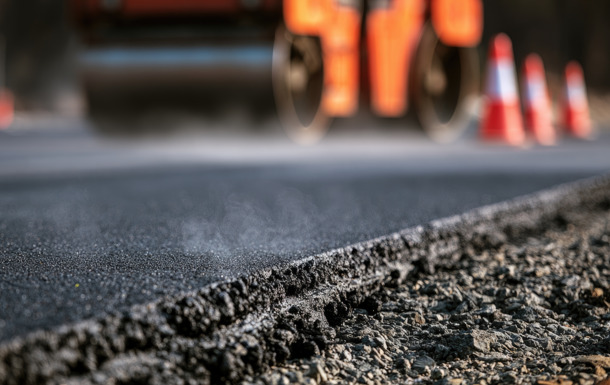
How bitumen modification with amide wax reduces costs and raises asphalt quality
1. Lower processing temperatures mean direct energy savings
Licomont BS 100 significantly reduces the viscosity of bitumen at processing temperatures. This allows asphalt to be mixed, transported and paved at 20-30°C lower temperature, thus cutting energy consumption per batch.
2. Shorter mixing times increase plant throughput
The additive enables faster and more efficient mixing of bitumen with mineral aggregates. Shorter mixing cycles mean higher output from the same plant capacity, directly improving productivity without additional capital investment.
3. Reduced heat radiation and vapor generation improve working conditions
Lower processing temperatures result in less heat radiation and fewer vapor emissions at the plant and on site. This helps reduce health and safety risks for workers and is one of many levers helping producers meet increasingly stringent occupational and environmental standards.
4. Protection of wearing parts lowers maintenance costs
By reducing the mechanical and thermal stress on mixing and conveying equipment during production, Licomont BS 100 extends the service life of wearing parts. This translates into lower maintenance expenditure and less unplanned downtime.
5. Improved bitumen adhesion to mineral aggregates raises end-product quality
The additive enhances the bond between bitumen and mineral surfaces, producing a more homogeneous and durable asphalt mix. For producers, this means a consistently higher-quality output that performs better in the field, strengthening their reputation and reducing the risk of warranty or performance claims.
Downloads
Frequently asked questions
Rutting and permanent deformation are caused by asphalt surfaces softening under sustained mechanical pressure, particularly from heavy goods vehicles, super-single tyres and high axle loads. The most effective engineering response is bitumen modification, which increases the hardness and deformation resistance of the asphalt mix. Amide wax additives such as Licomont BS 100 address this directly. When added at a rate of 3% to Bitumen 70/100, the softening point increases from 53 to 94 degrees Celsius, meaning the bitumen remains stable at significantly higher temperatures before softening under load. Needle penetration at 25 degrees Celsius decreases from 75 to 55, indicating a harder, more resistant binder. Independent test track validation confirms this performance: while unmodified bitumen showed critical deformation after 12,000 overruns, bitumen modified with an amide wax additive withstood 20,000 overruns without failure. For high-load applications such as motorways, container terminals and warehouse access roads, bitumen modification is a proven and cost-effective solution.
Both FT paraffin and amide wax reduce bitumen viscosity at processing temperatures, enabling lower mixing and paving temperatures. However, FT paraffin is purely a processing aid: it can soften bitumen at higher service temperatures, actively reducing rutting resistance and road durability. Amide wax, such as Licomont BS 100 from Clariant, goes further by raising the softening point, increasing bitumen hardness across a wide temperature range and enhancing adhesion to mineral aggregates. The result is stronger, longer-lasting roads rather than simply easier construction.
Amide wax additives are among the most effective solutions for reducing processing, transport and paving temperatures in asphalt production. Their mechanism is temperature-dependent: at service temperatures they increase bitumen hardness and stability, but above 120 degrees Celsius their viscosity drops sharply, making the bitumen significantly easier to process and handle. In practice, this means asphalt plants can mix, transport and compact modified asphalt at considerably lower temperatures compared to conventional hot mix production. The benefits are directly measurable: lower fuel consumption per batch, reduced heat radiation at the plant and on the paving site, less vapour generation improving working conditions, and shorter mixing cycles increasing overall plant throughput. For asphalt producers operating under pressure to reduce carbon emissions and energy costs, amide wax modification offers a straightforward and technically validated route to more efficient production without compromising the performance of the finished road surface.