
Closing the loop: How Clariant is enabling circular plastic
Delivering on Clariant's purpose »Greater chemistry - between people and planet.«
This story is an example of how Clariant delivers on its purpose-led strategy.
Séval Schichtel, Sales and Business Development Manager, Ethylene, and Sebastian Lars Löscher, Business Development Manager, Purification, recently sat down with Kristina Morgan, Global Marketing Manager, Petrochemicals, at Clariant, to discuss how we’re enabling a circular economy where plastics are continuously reused rather than ending up in landfills, incinerators, or the environment.
This interview explains how Clariant enables the chemical recycling process through its complementary portfolio of adsorbents and hydrogenation catalysts. These technologies work seamlessly together to valorize challenging plastic waste streams, including mixed and contaminated materials, transforming them into virgin-quality feedstocks that integrate directly into existing petrochemical plants, closing the loop and enabling a truly circular plastics economy.
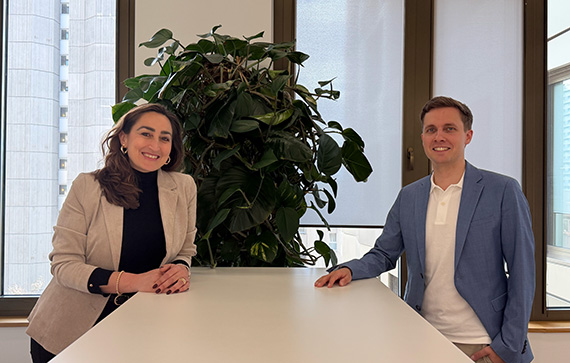
Welcome, Séval and Sebastian. Thank you for taking the time to talk to me about today’s topic: Circularity and Plastics Recycling. Sustainability is at the heart of everything we do here at Clariant. To start off, can you explain in simple terms why plastic waste has become such a critical environmental issue today?
Séval: Plastic waste has become one of our most pressing environmental challenges because of the sheer volume we produce and how long it persists in the environment. Globally, we produce over 400 million tons of plastic annually, with approximately half designed for single-use purposes. When these plastics can't be recycled effectively, they end up in landfills where they can take hundreds of years to break down, or worse, they're incinerated, releasing greenhouse gases. Currently, only about 9% of all plastic ever produced has been recycled, while an estimated 8-10 million tons enter our oceans each year.
Sebastian: The real issue is that we've been operating in a linear economy – we make, use, and dispose – rather than a circular one where materials are continuously reused. Transitioning to better recycling and circular practices could significantly reduce CO2 emissions; recycling plastic saves at least 50% of carbon emissions compared to virgin production, with some studies showing savings of 70-80%. If plastics are not recycled, we need to explore for more fossil-based oil – which increases emissions; but, if we keep the plastic in the loop, we can reduce the exploration of oil and reduce the overall CO2 impact. Furthermore, while recycling is essential, the direct reduction of plastic production and consumption stands as a critical second pillar in the fight against environmental pollution, as preventing waste at the source is the most effective way to eliminate its ecological footprint.
Why is plastics recycling so much more difficult than, say, recycling glass or aluminum?
Séval: Recycling glass and aluminum is relatively straightforward because they are elemental materials that can be melted and reformed indefinitely without losing quality. In contrast, plastics are a diverse family of polymers, each with unique chemical structures, melting points, and additives that make them difficult to process together. When different plastic types are mixed or contaminated with food residue and adhesives, the resulting material is often brittle and unusable for high-grade products. Additionally, each time you mechanically recycle plastic, it can degrade in quality, which limits how many times it can be recycled. It's like trying to unscramble an egg – once different plastics are mixed and contaminated, separating them becomes extremely challenging.
What happens to mixed plastic waste that can't be mechanically recycled? Where does it typically end up?
Sebastian: When mixed plastic waste exceeds the capabilities of mechanical recycling, often due to multi-layer compositions or heavy contamination, it is typically diverted into a "leakage" or "end-of-life" stream. The most common destination is waste-to-energy incineration. While this process prevents plastics from lingering in the landscape and generates usable electricity or heat, it fundamentally transforms the material into CO2 and other atmospheric emissions, effectively "linearizing" the carbon. Alternatively, these plastics end up in landfills, where their high molecular stability ensures they persist for centuries as a dormant environmental burden. From a resource perspective, this represents a significant loss of embedded energy. Plastics are essentially "solid oil," derived from fossil fuel feedstocks; when we incinerate or bury them, we discard both the physical material and the immense caloric energy used in their original synthesis. This inefficiency is the primary driver behind the development of advanced or chemical recycling, which aims at closing the loop where mechanical methods fail.
Tell me more about chemical recycling – can you explain what that means in everyday language? How is it different from traditional recycling?
Séval: To understand the difference between these two methods, imagine mechanical recycling as shredding and reforming: you are physically breaking the plastic into flakes and melting them to create something new, but the underlying molecular chains remain the same (and grow weaker with each cycle). Chemical recycling, often called advanced recycling, is more akin to molecular deconstruction. It breaks the plastic down to its original chemical building blocks, allowing us to "reset" the material to its virgin state.
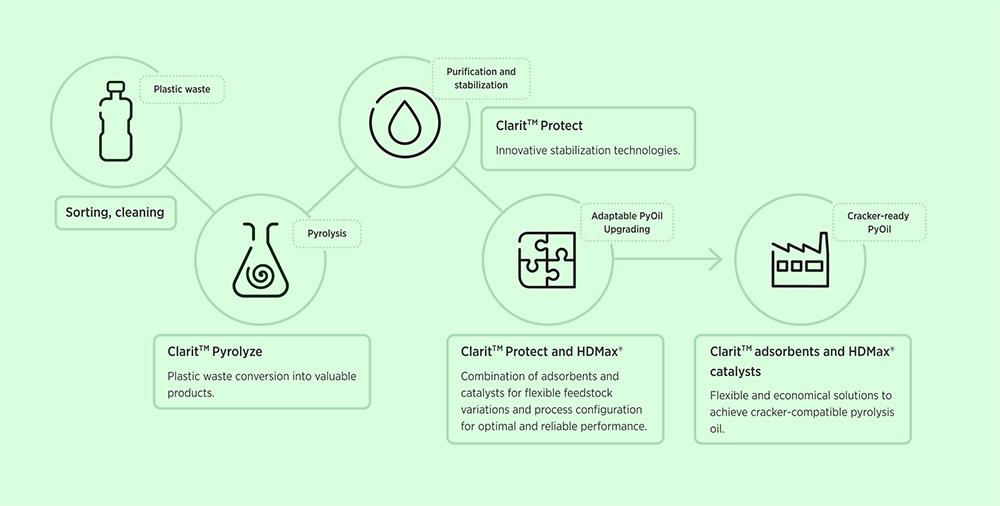
The most common method used is pyrolysis, a process that subjects mixed plastic waste to high heat in the absence of oxygen. This breaks the polymers down into a liquid known as pyrolysis oil (or "pyoil"). This oil serves as a secondary feedstock that can be purified and re-introduced at the very beginning of the plastic production chain. The primary advantage here is twofold: first, it can process complex, contaminated, or multi-layered plastics that mechanical systems reject; and second, the resulting plastic is chemically identical to "new" fossil-based plastic. This allows for infinite loops without the loss of quality typically seen in traditional recycling.
What are the main technical hurdles that have prevented the plastics industry from achieving true circularity until now?
Sebastian: Historically, true circularity has been hindered by two primary technical barriers. First is the "chemical cocktail" inherent in mixed plastic waste; this volatile mix of polymers and contaminants - such as chlorine and nitrogen - varies with every batch, often jeopardizing equipment integrity and product quality. Maintaining a stable output from such unpredictable feedstock remains a significant engineering challenge.
Second is the difficulty of achieving industrial-scale consistency that meets the petrochemical sector’s rigorous specifications. Earlier processes were often energy-intensive, costly, and produced unacceptable qualities. Only recent advancements in catalytic and sorptive technologies have made it possible to refine these complex waste streams into high-purity feedstocks efficiently, finally allowing chemical recycling to meet the stringent requirements necessary for closing the loop at scale.
What does Clariant offer to support the plastic recycling industry lift off?
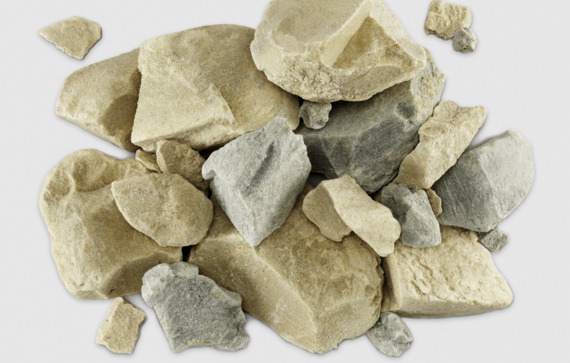
Sebastian: Imagine our offering like a layered defense against unwanted impurities: In the first stage, mineral based catalysts of the Clarit Pyrolyze series help the pyrolytic process to obtain a better pyrolysis oil with reduced impurities. Following, Clarit Protect adsorbents work like the second layer, they capture and remove larger particulates and contaminants from the pyrolysis oil, similar to how a filter removes sediment from water. We call them Clarit Protect since they're particularly good at protecting the life of the downstream refinery assets by taking out impurities that would otherwise clog or damage it.
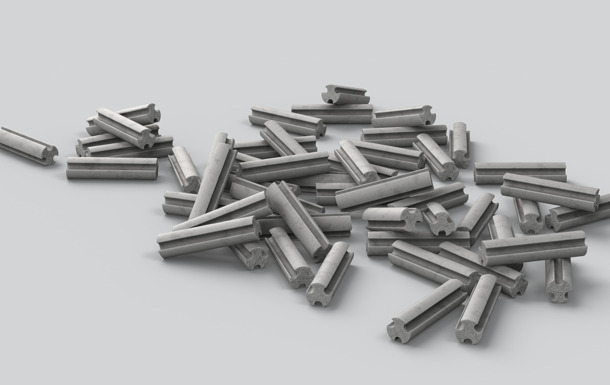
Séval: The final and most throughout layer of defense are our HDMAX catalysts, which act like a specialized filter that doesn't just remove impurities but actually transforms problematic molecules into harmless ones: It facilitates chemical reactions that convert contaminants like chlorine compounds, nitrogen compounds, and unstable molecules into forms that can be safely removed or that meet quality specifications. Together, they clean up the pyrolysis oil so thoroughly that it becomes compatible with existing petrochemical plants – what we call "cracker-compatible" feedstock.
What is the sustainability advantage of using Clarit Pyrolyze and Clarit Protect compared to other options?
Sebastian: Think of Clarit Pyrolyze as the "intelligence" inside the pyrolysis oven. While many processes still rely on raw, blunt heat to melt and break down plastic, Clarit Pyrolyze works at a molecular level to ensure the resulting oil is high-quality and contains fewer impurities from the start. This makes the process overall more economic and sustainable.
Clarit Protect Adsorbents then steps in as the essential secondary purification phase. It’s a specialized adsorbent series designed to strip away another bulk of the contaminants, ensuring the oil is stable and clean enough for safe transport. For plant operators, this is a major strategic win: it provides a low-CAPEX way to hit strict purity standards while acting as a vital buffer to smooth out the inevitable fluctuations in waste quality. For the industry this allows to have smaller, decentralized plastic pyrolysis plants, close to where the waste accumulates.
What makes Clariant's multi-stage hydrogenation process more efficient than alternative methods that require three to four reactors?
Séval: This is one of the key innovations that make our technology commercially viable. Some alternative technologies need three to four separate reactors to achieve the same level of purification that our HDMax™ catalysts deliver in a single step.
Think about what that means practically: fewer reactors mean significantly lower capital investment – you're building less equipment. It means reduced operational complexity – less equipment to monitor and maintain. It means lower energy consumption – you're not heating and cooling materials multiple times. And it means a smaller physical footprint for the facility.
Additionally, our technology enables subsequent hydrocracking to produce naphtha-like hydrocarbon fractions, giving producers even more flexibility in their product output. This efficiency is crucial for making chemical recycling economically competitive with virgin plastic production, which is essential for widespread adoption.
If someone reading this blog wants to support the transition to a circular plastics economy, what can they do?
Séval: First, continue recycling diligently – sort your plastics properly and keep them clean. This helps mechanical recycling work efficiently for the materials it handles best.
Second, support brands and companies that are investing in recycled content and circular solutions. Consumer demand drives corporate action, so when you choose products made with recycled materials, you're sending a powerful market signal.
Third, stay informed and advocate for policies that support circular-economy infrastructure. We need investments in both mechanical and chemical recycling facilities, and supportive regulatory frameworks.
The transition to a circular plastics economy is happening, and everyone has a role to play – from individual consumers to global corporations. Together, we can close the loop.