
Safe and sustainable chemistry
ADDRESSING TRENDS AND ANTICIPATING LEGISLATION
Clariant is known for its leading role in driving forward safe and sustainable chemistry. But how do you organize the constant push for innovation that is at the core of this role? An interview with Richard Haldimann, Head of Sustainability Transformation at Clariant, on systematic programs, sustainable products, and current developments in Europe.

Richard, you’re a PhD chemist with long experience in business and now head of Clariant’s Sustainability Transformation unit. What’s the purpose behind this unit?
Broadly speaking, its purpose is to integrate sustainability even more deeply into all we do. We’re seeing how, thankfully, sustainability is changing societies and markets in all 50 countries we serve, and in all our Business Areas. In Care Chemicals there’s a growing focus on safe and sustainable ingredients, in Catalysis on reducing carbon, and in Natural Resources on better circularity. In our own company, adding value with sustainability has long become a key element of our business strategy, and the way to create that value is constant innovation and R&D. Essentially, we’ve taught ourselves to see sustainability challenges as opportunities for better products, by anchoring this approach deep in our innovation process’s DNA.
How did you do this? How does Clariant go about creating the safe and sustainable innovations the world wants?
Mainly by constantly, and very systematically, thinking about what these innovations could be. As far back as 2012, we’ve set up our Portfolio Value Program, which made us something of a revolutionary at the time. We’ve since used it to screen most of our product portfolio in terms of social, environmental and economic value, across the entire life cycle, in order »keep the best and replace the rest,« so to speak. The best can go on to receive our EcoTain™ label, a green mark of distinction that often allows customers to progress their sustainability agenda, either by offering a superior sustainability performance in the end product or by helping them to achieve their sustainability targets. And we’re not only screening products but also the program itself. Currently, we’re in the process of upgrading it to a 2.0 version to reflect the latest science and policy developments.
And you also use this program to assess the value of new ideas and products?
Certainly. And in terms of tangible business benefits we’ve reaped from it that’s perhaps the most outstanding one. Thanks to the program and our general commitment in the field, our market observers and R&D people have developed a very good nose for sustainability issues. Which usually gives us a head start in finding good solutions for them.
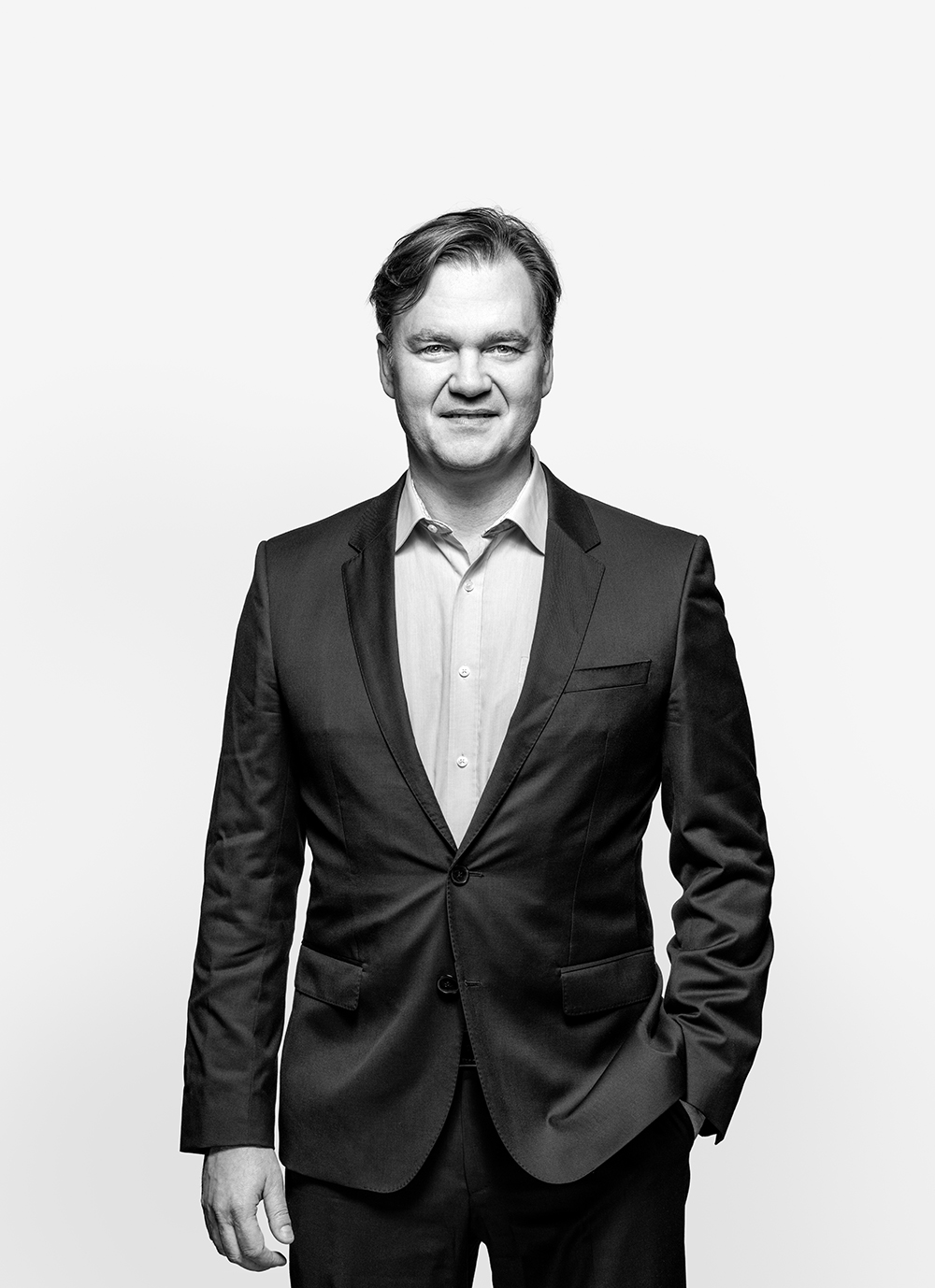
»Finding good alternatives can take time, especially when seeking a holistic view of lifecycle and performance. But the overall vision – to put the European economy and society on a sustainable pathway – is the right one, and we are ready and committed to playing our part.«
Richard Haldimann
Head of Sustainability Transformation
Can you give an example? A product or ingredient where you identified a safety or sustainability challenge and solved it?
One excellent example is our Safebrake™ Life brake fluid. These fluids are usually classed by standards set by the US Department of Transportation, DOT for short, and one very widely used type are DOT 4 fluids. Conventional fluids contain borate esters, which improves their performance but has the drawback that these esters are hazardous themselves . When a mechanic or car owner changes the fluid, they can be exposed to the brake fluid containing the hazardous borate ester. Our sustainability expertise allowed us to spot this risk early on. Which is also a risk for brake fluid makers, because of the regulations that may come.
What did Clariant do?
Basically, we used our formulation skills to create a high-performing alternative without borate esters. That’s Safebrake™ Life, the first fluid that fully meets DOT 4 specs but is free of the EU’s warning label for carcinogenic, mutagenic or reprotoxic substances. It’s based on readily biodegradable glycols and carries our EcoTain™ distinction, to show it offers better sustainability without any trade-offs in performance. It makes both driving and maintenance safer, and has a very low viscosity that’s great for modern assisted braking and driving systems.
That definitely covers safety. As well as sustainability, actually…
Yeah, it does. But I also have a great example where we anticipate legislation by replacing materials with a biobased alternative. Which perhaps even better fits the idea most people associate with sustainability.
What materials do you replace?
Those that can produce microplastics, which the EU is currently thinking about restricting. Again, we haven’t waited until the legislation is out, but proactively worked on a solution.
And what’s Clariant’s alternative?
Licocare™ RBW Vita, a biobased wax that can replace petro-based products in plastics, inks, agricultural coatings and many other applications. The RBW stands for rice bran wax, a non-food competing byproduct of rice oil production we upgrade into high-performing additives. Vita is our designator for products with a renewable carbon index of at least 98%, and you’ll also see it on many of our other products. Like Safebrake™ Life, this one carries our EcoTain™ label, and in 2020, it also won the ICIS Innovation Award for Best Product.
The chemical industry seems quite wary of what the EU’s Green Deal and its new chemicals strategy may bring. But listening to you, Clariant seems ready to take on the challenge.
For sure the Green Deal comes with challenges. And here we look forward to working with the legislators to make sure that the legislations have the intended impact. Finding good alternatives can take time, especially when seeking a holistic view of lifecycle and performance. And we favor support for innovation over all-too sudden shifts in the playing field that run the risk of stifling earnest efforts. But the overall vision – to put the European economy and society on a sustainable pathway – is the right one, and we are ready and committed to playing our part.