
Formulation complexity in wet wipes: The hidden challenge to preservation and how formulators can solve it



Delivering on Clariant's purpose »Greater chemistry - between people and planet.«
This story is an example of how Clariant delivers on its purpose-led strategy.
Wet wipes are among the most challenging personal care products to preserve. Their high-water activity, repeated consumer exposure, long shelf life and increasingly sophisticated formulations combine to create ideal conditions for microbial growth. Meanwhile, consumers are demanding ever gentler, more multifunctional and environmentally responsible juices for wipes that contain a greater proportion of biodegradable ingredients. As a result, formulators must strike a delicate balance, safeguarding product safety while still driving forward innovative product development.
We asked Clariant’s preservation experts Christina Richardson, Marketing Manager Personal Care North America, and Aysel Calkap, Business Development Manager Personal Care, to explain why preserving today's increasingly complex wet wipe formulations has become more challenging than ever and to share their recommendations for building robust preservation systems.
What's driving the demand for novel preservation systems?
Christina: The demand for novel preservation systems is being shaped by three converging trends, and the drivers today are no longer purely technical; market and societal expectations matter just as much. First, there's growing ecological concern, consumers and companies alike want to protect the planet, which is driving demand for safer, more natural ingredients. Second, regulation is tightening around the safety of chemicals, with increasing scrutiny from advocacy groups. And third, consumers themselves are becoming more conscious, favoring simplified yet effective routines and seeing their beauty products as part of a broader wellness lifestyle.

Our experts: Aysel Calkap (left), Business Development Manager Personal Care, and Christina Richardson (right), Marketing Manager Personal Care North America
Why are wet wipes high-risk products?
Christina: Wet wipes contain a high level of water, creating an ideal environment for microbial growth. They're also opened repeatedly throughout their lifetime, and every opening is another chance for contamination, especially since wipes are often used in sensitive applications like baby care, intimate hygiene and facial cleansing. Combined with long shelf lives, safety depends entirely on the preservative system holding up over time. On top of that, modern formulations are getting more complex, combining surfactants with botanical extracts, fragrances and other ingredients interacting with each other, which can quietly reduce preservative availability and effectiveness. So, it's really the combination of high-water content, repeated use, sensitive applications and formulation complexity that makes wet wipes one of the toughest categories to preserve.
What is the hidden problem in preserving wet wipes?
Aysel: The hidden problem is that formulation complexity quietly undermines preservative performance. The more ingredients added to a formulation, the more interactions are created, and each interaction is a potential weak point for the preservation system. Botanical extracts, for instance, can introduce nutrients like proteins and sugars that feed microorganisms rather than fight them. Oils and polymers can reduce preservative availability through partitioning or adsorption, trapping the preservative inside emulsions, gels, or fibres where it can't do its job. pH shifts can influence antimicrobial efficacy as well. This is why preservation can't be assessed ingredient by ingredient. It must be evaluated on the complete formulation, since it's the combination of ingredients that ultimately determines performance.
Where does contamination come from?
Aysel: When we investigate contamination events, we rarely find a single source. Contamination happens because microorganisms are simply everywhere, and that's the fundamental challenge any preservative system has to contend with. Rather than one weak link, it usually enters through several pathways at once. It often starts with raw materials. Water, typically the largest portion of a wet wipe formulation, can carry microorganisms if treatment and storage aren't properly managed. Botanical extracts and other natural ingredients are particularly tricky, since they can introduce contamination directly while also supplying nutrients that feed microbial growth. The substrate matters too. Unlike pharmaceutical products, wipe materials aren't sterile, so they bring their own microbial burden for the preservative system to control. On the manufacturing side, biofilms can develop inside equipment, creating protected microbial communities that are hard to eliminate and can continuously seed contamination. The water system deserves special attention, since a contaminated water loop can quickly affect multiple products at once.
And even a perfectly manufactured product isn't in the clear. Every time a pack is opened, environmental microorganisms get a chance to get in, which is why the preservative system needs to stay robust throughout the entire shelf life and use period, not just at manufacture. The key takeaway is that contamination prevention requires a holistic approach covering raw materials, people, equipment, water, infrastructure, and consumer interaction.
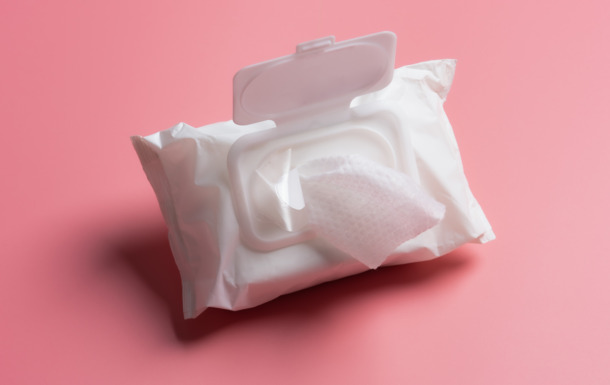
Formulation complexity can challenge preservative performance
What defines a robust preservation system and why is the challenge test important?
Aysel: A robust preservation system rests on a few key qualities. It must maintain efficacy even as the formulation changes, since ingredients are constantly being added, removed, or adjusted during development, and the preservation system needs to keep performing despite that. It must also offer broad-spectrum protection against bacteria, yeasts, and molds alike, not just one type of microorganism. And it needs to get the dose right from the start: too little preservative doesn't just weaken protection, it can let microorganisms develop tolerance and grow into more robust, harder-to-control populations, so much so that even correcting the dosage later may not fully work. This is why sub-lethal preservative levels should always be avoided. Challenge testing is what ties all this together. Recognized methods such as ISO 11930 or European Pharmacopoeia criteria are really the only reliable way to verify that a formulation can withstand realistic microbial challenges, rather than simply assuming it will be based on the ingredients used. But passing a challenge test once isn't enough, the system shouldn't operate at the "cliff edge," where a small formulation tweak or an unexpected contamination event could tip it into failure. That's why testing isn't a one-off exercise: it needs to be repeated whenever meaningful formulation changes occur, since even a new botanical extract or a shift in pH can change how the preservative performs in practice. Preservative efficacy testing (PET), ideally backed by proper microbiology lab work, remains the critical tool for demonstrating that a system genuinely delivers real-world effectiveness. Ultimately, a robust preservation system is about sustained, long-term protection that never operates at the cliff edge.
What's the role of multifunctional boosters in wet wipes applications?
Christina: Multifunctional boosters play a key role in tackling the very complexity problem we've been discussing, where more ingredients mean more interactions, and more complexity creates more microbial niches for preservation systems to guard against. Rather than adding yet another single-purpose ingredient into an already crowded formulation, multifunctional boosters combine several benefits in one, helping to simplify the formulation while still delivering robust protection. One clear example from our testing is boosting: a multifunctional booster can reduce the amount of preservative needed by up to 50%. Beyond boosting, these ingredients can also act as solubilizers, helping preservatives dissolve properly and work consistently throughout the formulation, achieving a higher performance. So essentially, multifunctional boosters let formulators do more with less, reducing preservative load, simplifying the ingredient list, and still delivering the broad-spectrum protection a robust preservation system demands.
Thank you for sharing these insights, Christina and Aysel!
For more information on Clariant’s modern preservation for beauty & personal care wipes, visit this page.